
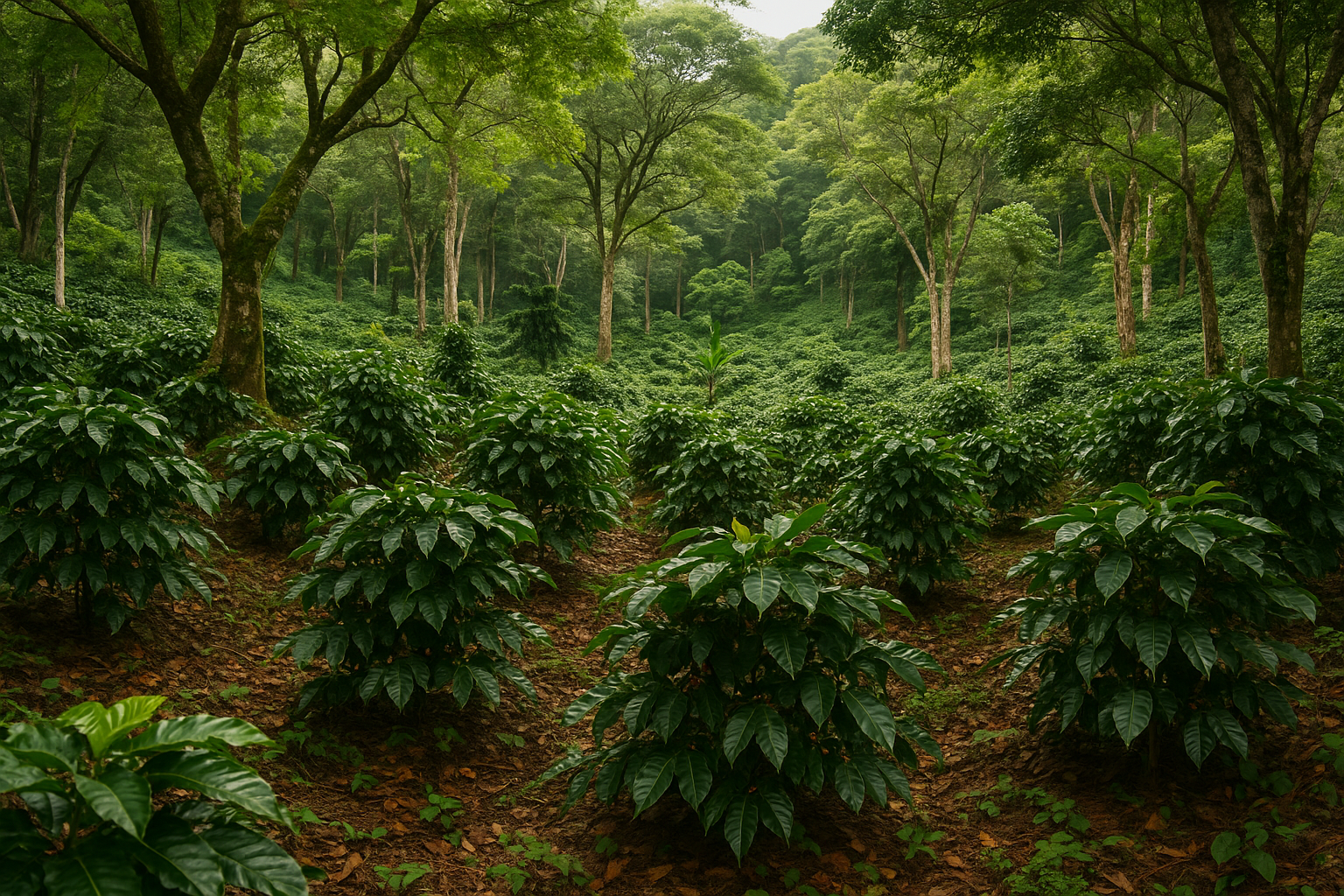
In the lush forests of Latin America, Africa, and Southeast Asia, a quiet revolution in coffee farming is taking place—one that offers a promising path for both ecological preservation and high-quality coffee production.
This method is known as shade-grown coffee, and it does far more than produce flavorful beans. It serves as a powerful tool in the global effort to preserve biodiversity.
While the conventional sun-grown method has contributed to deforestation and ecosystem collapse, shade-grown coffee provides a rare example of agriculture and nature working in harmony.
In this article, we’ll explore how shade-grown coffee supports biodiversity, improves sustainability, and why it matters more than ever.
What Is Shade-Grown Coffee?
Shade-grown coffee refers to coffee plants cultivated beneath a canopy of taller trees, mimicking the natural conditions of tropical forests where wild coffee originally thrived. Unlike sun-grown coffee, which requires deforestation and clear-cutting, shade-grown systems integrate coffee into existing or restored forests.
This method can take several forms:
- Rustic: Coffee grown among existing forest trees with minimal modification
- Traditional polyculture: Coffee grown with fruit trees, timber trees, and other crops
- Commercial polyculture: More structured rows of coffee with planted shade trees
- Shaded monoculture: Coffee with one or two types of shade trees, still better than full sun
Each of these supports biodiversity to varying degrees, but all are significantly more beneficial than full-sun systems.
How Conventional Coffee Farming Harms Biodiversity
Traditional coffee-growing regions were once thriving habitats for countless species. However, the shift toward sun-grown coffee—designed to increase yield—has often meant deforestation, soil erosion, and the destruction of native plant and animal life.
When forests are cleared to make room for full-sun coffee farms:
- Bird populations decline as habitats disappear
- Insect species lose host plants and pollinators suffer
- Large mammals and reptiles are driven away or hunted
- Plant species diversity plummets, leading to weaker ecosystems
These losses aren’t just ecological tragedies—they also weaken the land’s natural resilience to pests, drought, and disease.
Shade-Grown Coffee and Bird Conservation
Birds are among the biggest beneficiaries of shade-grown coffee. Tropical forests serve as crucial breeding and feeding grounds for both resident and migratory birds.
According to studies by the Smithsonian Migratory Bird Center, shade-grown coffee plantations can support over 150 bird species, while sun-grown farms may support fewer than 20. Many of these are insectivorous birds that also help control pests naturally.
Bird-friendly certifications, like the Smithsonian Bird-Friendly label, ensure that the coffee you’re drinking is protecting avian populations while also meeting organic farming standards.
Supporting Insects and Pollinators
Pollinators like bees and butterflies play an essential role in all ecosystems—and in agriculture. In shade-grown coffee farms, diverse plants and flowering trees attract these important insects.
This not only supports the reproduction of wild plants but also improves the health and yield of coffee itself. In fact, research shows that pollinated coffee plants produce more uniform and better-tasting beans.
The preservation of pollinator habitats is becoming increasingly critical in the face of global insect decline. Shade-grown coffee offers one of the few large-scale agricultural methods that still supports these tiny, vital workers.
Maintaining Soil and Water Health
The canopy of trees in shade-grown systems protects soil from erosion by reducing the impact of rainfall. Their roots hold the soil together, while their leaf litter returns nutrients to the earth.
In addition, shaded farms:
- Retain more moisture in the soil
- Reduce the need for chemical fertilizers
- Support mycorrhizal fungi networks that help plants share nutrients
- Filter and slow water runoff, reducing sedimentation in nearby rivers
All of these factors help maintain long-term fertility and ecological balance, reducing reliance on environmentally harmful inputs.
Combatting Climate Change
Forests are among the most effective carbon sinks on Earth. By preserving tree cover, shade-grown coffee farms store more carbon than sun-grown systems.
In fact, a well-managed agroforestry coffee farm can sequester up to 70% as much carbon as a primary forest. That’s a huge benefit in the fight against global warming.
Furthermore, trees in these farms provide microclimates that help buffer crops from extreme weather events, offering resilience in the face of increasingly unpredictable climate patterns.
Benefits for Farmers and Communities
Beyond ecology, shade-grown coffee offers economic and health benefits for farming families:
- Diversified income: Fruit, timber, and medicinal plants grown alongside coffee provide extra revenue
- Lower input costs: Less need for chemical pesticides or irrigation
- Improved health: Reduced exposure to harmful agrochemicals
- Longer productive lifespan: Shade-grown coffee trees live longer, reducing replanting costs
This holistic approach supports community sustainability and helps farmers resist market shocks and environmental stressors.
Does Shade-Grown Coffee Taste Better?
Many coffee aficionados believe it does. The slower maturation of beans under shade allows sugars and complex flavors to develop more fully, resulting in richer, more balanced coffee.
Because shade-grown coffee farms are usually smaller and more carefully managed, there is often greater attention to harvesting only ripe cherries and using traditional processing techniques. These quality controls lead to better beans and higher prices on the specialty market.
Challenges and Misconceptions
Despite its benefits, shade-grown coffee isn’t without challenges:
- Lower yields compared to sun-grown coffee
- Longer time to first harvest, as trees grow more slowly
- Certification costs can be burdensome for small farmers
- Market confusion: Some brands use “shade-grown” loosely without verification
However, with increasing consumer awareness and support from NGOs, cooperatives, and certifying bodies, more farmers are seeing the long-term value of this model.
How to Support Shade-Grown Coffee
Here’s how you can make a difference as a consumer:
- Look for certified labels: Smithsonian Bird-Friendly, Rainforest Alliance, or USDA Organic
- Buy from transparent roasters who share farm details and sustainability efforts
- Ask questions: Where was the coffee grown? Were trees preserved?
- Support small and cooperative producers who invest in shade-grown methods
Even switching just one of your regular coffee purchases to a verified shade-grown brand makes a difference in sustaining demand for biodiversity-friendly farming.
Future Outlook: Scaling Without Losing the Forest
As climate change intensifies, farming methods that support biodiversity are no longer optional—they are essential. The challenge now is scaling these practices in a way that remains true to their ecological values.
Innovation in agroecology, better access to certification, and continued investment in small-scale producers can help shade-grown coffee compete with conventional systems. By keeping forests intact, shade-grown coffee represents one of the few models where agriculture enhances rather than replaces nature.
Final Words: Brewing Biodiversity Into Every Cup
Shade-grown coffee proves that sustainable agriculture and biodiversity don’t have to be at odds. In fact, when done right, they are mutually reinforcing. With every bag of shade-grown beans, you’re not only enjoying a high-quality product—you’re also preserving the birds, insects, trees, and ecosystems that make our world thrive.
Your daily brew can be more than a habit. It can be a stand for biodiversity, sustainability, and a future where farming works with nature—not against it.

Marcelo Oliveira is a passionate coffee enthusiast and writer who explores every angle of the world’s favorite brew—from its rich history to modern brewing techniques. With a deep appreciation for both tradition and innovation, Marcelo brings clear, engaging insights to help readers enjoy coffee on a whole new level.