
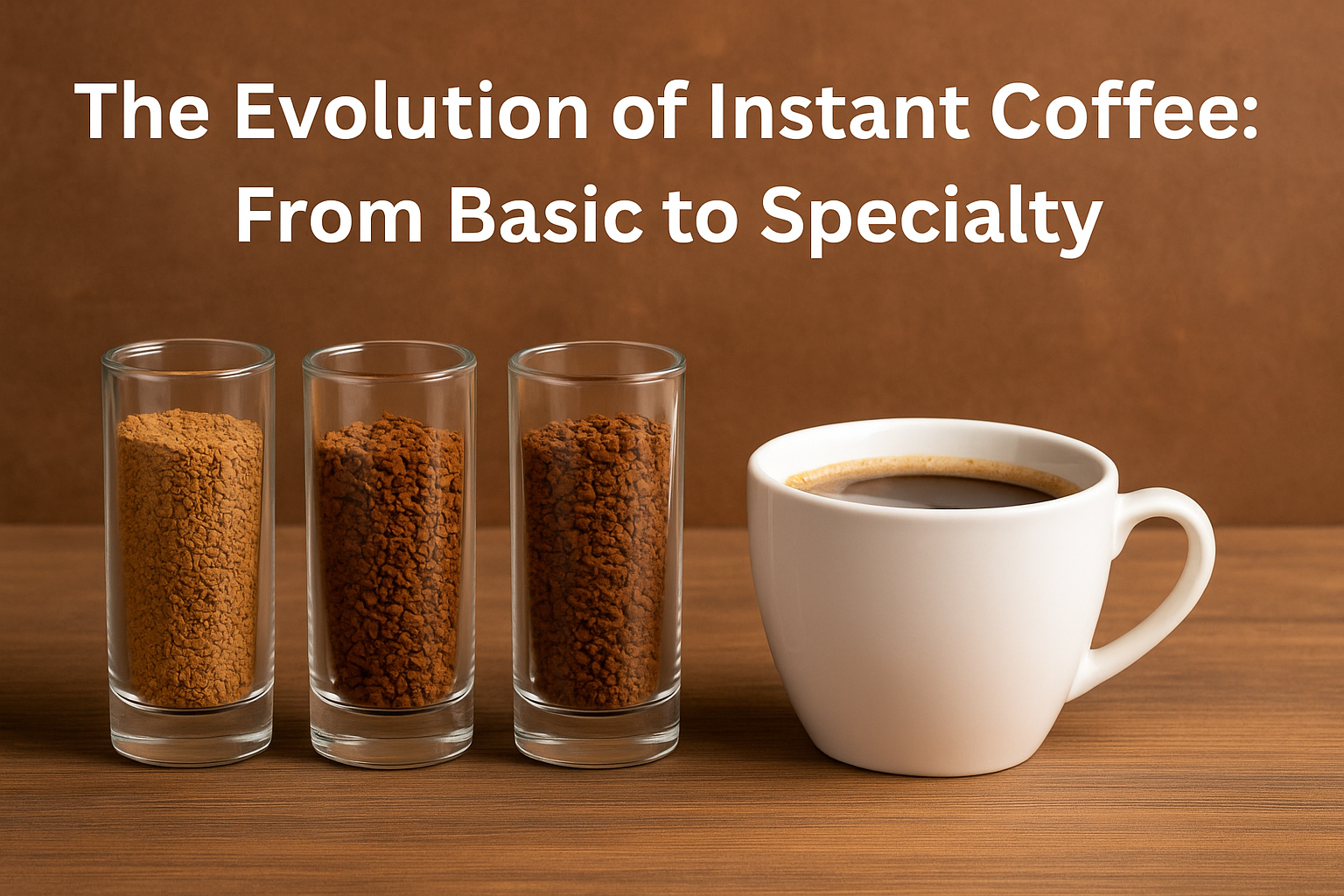
Instant coffee has long been associated with convenience over quality—a quick fix for a caffeine hit when brewing a fresh cup simply isn’t an option.
For decades, it was considered inferior to freshly brewed coffee in both flavor and aroma.But things are changing.
A new generation of specialty instant coffee is emerging, transforming how we view this once-maligned product. What used to be bland and bitter is now flavorful, complex, and made from high-quality beans.
In this article, we’ll explore the history of instant coffee, how it’s made, the differences between commercial and specialty options, and why it’s finally gaining respect in the coffee world.
What Is Instant Coffee?
Instant coffee is a dehydrated coffee extract—a form of coffee that dissolves quickly in water. Unlike ground coffee, which requires brewing, instant coffee is designed for speed and simplicity.
You just add hot water, stir, and drink.
It’s often sold as:
- Powder
- Granules
- Single-serve sachets
- Freeze-dried crystals
Despite its simplicity, the process behind it is surprisingly complex.
A Brief History of Instant Coffee
Instant coffee has been around for over a century. Here’s how it evolved.
1. Early Origins (1800s)
The earliest forms of instant coffee appeared in the mid-1800s, primarily for military use. These early attempts were crude and poorly received.
In 1901, Japanese-American chemist Satori Kato patented the first successful soluble coffee process in Chicago, which sparked commercial interest.
2. WWII and Mass Production
Instant coffee became widely popular during World War II, especially with soldiers. It was lightweight, easy to prepare, and provided a caffeine boost on the battlefield.
Companies like Nestlé and Maxwell House capitalized on this demand, producing large quantities of instant coffee for global markets.
3. Post-War Popularity
By the 1950s and 1960s, instant coffee was a kitchen staple, especially in the U.S. and Europe. It was affordable, shelf-stable, and required no equipment.
However, to keep costs low, producers used low-grade Robusta beans, which led to bitterness, harsh flavors, and a chemical aftertaste.
This created the long-standing perception of instant coffee as cheap and low-quality.
How Instant Coffee Is Made
There are two main production methods: spray-drying and freeze-drying.
1. Spray-Drying
- Liquid coffee is sprayed into a tower of hot air.
- Water evaporates, leaving behind fine powder or granules.
- It’s fast and cost-effective but can damage flavor compounds due to heat exposure.
Spray-dried instant coffee is common in supermarket brands and tends to have a burnt or flat taste.
2. Freeze-Drying
- Brewed coffee is frozen at extremely low temperatures.
- The ice is then removed via sublimation (solid to vapor), preserving delicate flavors.
- The result is high-quality crystals with better aroma and taste.
This method is more expensive but widely used in specialty instant coffee products.
Commercial vs. Specialty Instant Coffee
Let’s compare the two side by side.
| Attribute | Commercial Instant Coffee | Specialty Instant Coffee |
|---|---|---|
| Bean Type | Robusta or low-grade Arabica | High-quality Arabica (often single origin) |
| Roast Level | Dark and uniform | Light to medium, origin-specific |
| Processing | Spray-dried | Freeze-dried or small-batch dried |
| Flavor | Bitter, flat, burnt | Complex, bright, nuanced |
| Target Market | Budget-conscious, bulk buyers | Coffee enthusiasts, travelers, busy professionals |
| Packaging | Jars or generic sachets | Compostable packets, branded sticks, QR codes for traceability |
Specialty instant coffee aims to capture the essence of specialty brewing—without the equipment or time investment.
Why Specialty Instant Coffee Is Gaining Popularity
Several trends are driving the rise of better instant coffee.
1. Busy Lifestyles
Even coffee lovers don’t always have time to grind, measure, and brew. Specialty instant allows for a quality cup at work, while traveling, or during outdoor activities—without sacrificing flavor.
2. Remote Work and Portability
As more people work from home or move between locations, portable convenience becomes a priority. Instant coffee meets that need with zero mess, zero gear.
3. Sustainability and Packaging
New brands are embracing eco-friendly packaging, including:
- Compostable sachets
- Minimal waste cartons
- QR codes that tell the coffee’s story
This aligns with consumer demand for transparency and sustainability.
4. Flavor Innovation
Some specialty brands offer single-origin sachets with distinct flavor profiles—like an Ethiopian coffee with jasmine and berry notes, or a Colombian lot with chocolate and citrus.
They’re designed to taste like hand-poured coffee, not instant.
Brands Leading the Specialty Instant Movement
Several companies have emerged as leaders in this space. Some noteworthy examples include:
Voila Coffee (U.S.)
- Partners with renowned roasters
- Offers single-serve packets
- Emphasizes cup quality and clarity
Swift Cup (U.S.)
- Uses freeze-drying
- Sells coffees from high-end roasters
- Easy to ship and store
Sudden Coffee (Discontinued but Influential)
- Helped kickstart the specialty instant trend
- Used small-batch freeze-drying
- Showed that instant could taste like a café pour-over
Brew Coffee Bar (Europe)
- Sells Colombian, Guatemalan, and African coffees
- Focuses on sustainability and traceability
Many third-wave roasters now offer limited edition instant options, especially for remote or international customers.
How to Make Instant Coffee Taste Better
Even if you’re not buying high-end instant, you can improve your cup with a few small tweaks.
1. Use Filtered Water
Bad water = bad coffee. Always use clean, filtered water, ideally just off the boil (about 92–96°C or 198–205°F).
2. Adjust the Ratio
Try using less powder per cup if your instant coffee is too strong or bitter. A good starting point is:
- 1 to 2 teaspoons of powder
- 200–250 ml of water
Taste and adjust.
3. Add a Pinch of Salt
A tiny pinch of salt can reduce bitterness and enhance sweetness, especially in commercial instant coffee.
4. Add Milk or Oat Milk
A splash of milk can round out harsh edges and create a smoother cup.
5. Try It Cold
Instant coffee dissolves in cold water, too. Add it to cold milk, stir or shake, and enjoy an iced version instantly.
Is Instant Coffee Bad for You?
Nutritionally, instant coffee is very similar to brewed coffee.
Benefits include:
- Antioxidants
- Caffeine for energy and alertness
- Fewer calories if consumed black
However, some low-quality instant coffees may contain:
- Additives or fillers
- Excess sodium (in 3-in-1 products)
- Excessive sugar in flavored mixes
Always check the label, and opt for pure instant coffee if you’re looking for the healthiest option.
Who Should Drink Instant Coffee?
Instant coffee may not replace your morning ritual, but it’s perfect for:
- Travelers and campers
- Students and busy professionals
- People with limited brewing gear
- Anyone who values convenience
- Office workers without access to fresh brews
It’s also a great backup option to keep in your pantry.
The Future of Instant Coffee
As demand grows, expect to see:
- More single-origin options
- Innovative packaging and branding
- Improved freeze-drying technology
- Subscription models with rotating coffees
- Barista-approved instant espressos or cold brew packs
Instant coffee may never fully replace fresh-brewed cups, but it’s no longer just a compromise—it’s becoming a category of its own.
Final Thoughts: Instant, but Not Inferior
The reputation of instant coffee is finally evolving. Thanks to innovation, better sourcing, and a growing appreciation for quality, it’s possible to have a great cup of coffee in seconds.
Whether you’re climbing a mountain, running late for a meeting, or just need something quick and good, instant coffee has your back.
Just remember: not all instant is created equal.
Choose wisely, and you’ll be surprised at how much flavor fits in such a small packet.

Marcelo Oliveira is a passionate coffee enthusiast and writer who explores every angle of the world’s favorite brew—from its rich history to modern brewing techniques. With a deep appreciation for both tradition and innovation, Marcelo brings clear, engaging insights to help readers enjoy coffee on a whole new level.