
Today, coffee is a drink for everyone—available on every corner, in every home, at every social level.
But centuries ago, it was quite the opposite.
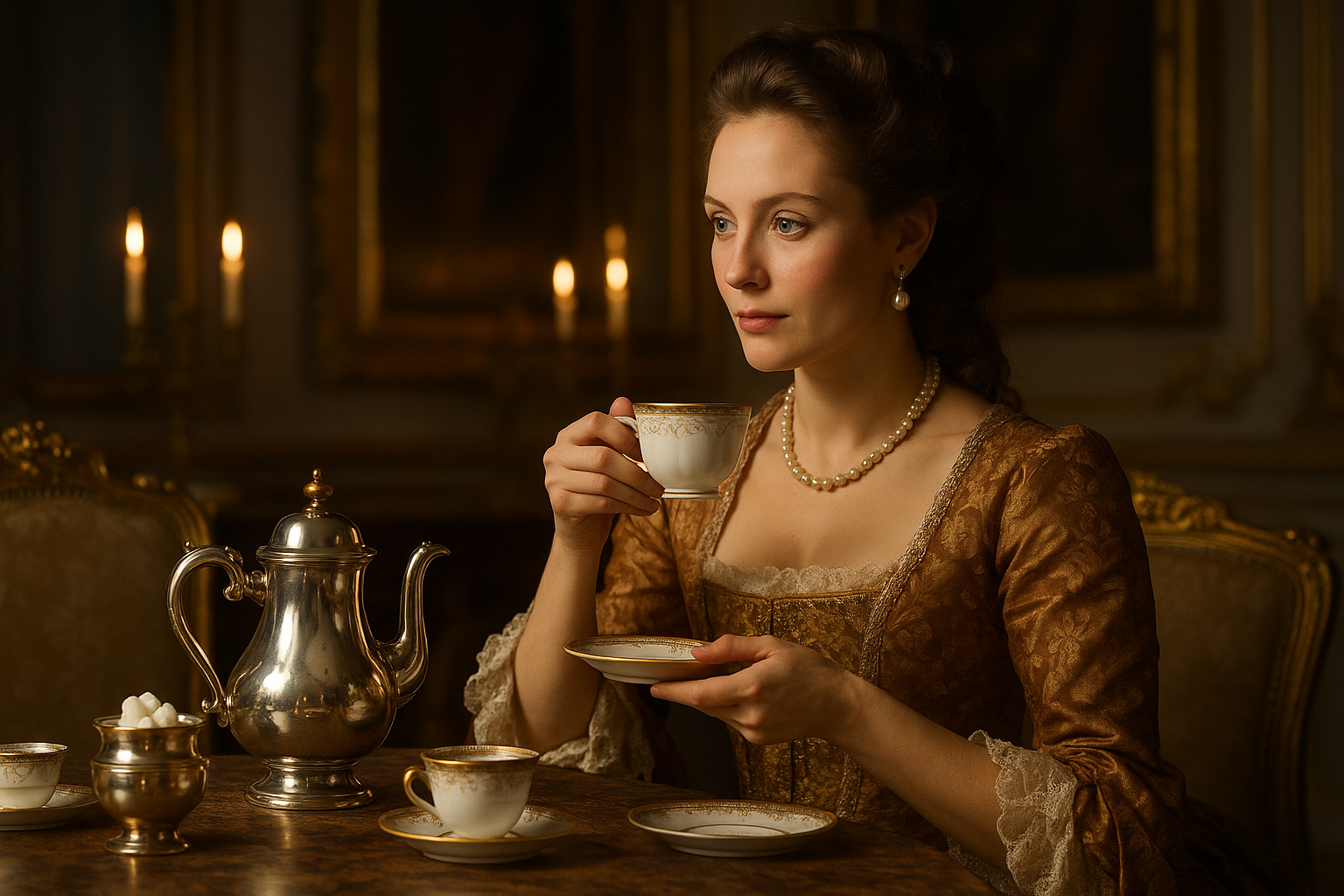
When coffee first entered European society, it was a luxury commodity, consumed only by the elite. In royal courts and aristocratic salons, coffee wasn’t just a beverage—it was a symbol of sophistication, wealth, and global power.
From French kings to Habsburg emperors, coffee helped shape the image of modern royalty. It became a tool of soft power, a fashion statement, and a marker of prestige.
This article explores how coffee gained a royal stamp of approval—and how the courts helped transform the drink into a global obsession.
A Precious Commodity Enters Europe
Coffee arrived in Europe in the 17th century through Venetian and Ottoman trade routes.
At first, it was expensive, rare, and exotic—available only in apothecaries and upper-class homes.
The novelty of the drink, its mysterious origins, and its stimulating effects made it a subject of curiosity among nobles and intellectuals.
In a time when food and drink were tightly tied to social status, serving coffee was a powerful way to signal one’s refinement and global awareness.
The French Court and the Cult of Coffee
In the court of Louis XIV, coffee made a dramatic entrance.
The Sun King, famous for his love of ceremony and elegance, embraced coffee as part of courtly ritual. The beverage was served in porcelain cups, alongside sugar and spices, during lavish gatherings at Versailles.
Guests would sip coffee while engaging in political conversation, poetry readings, and games.
Coffee became part of a performance of power—not just a drink, but a carefully orchestrated social tool.
The French nobility soon followed the king’s lead. Serving coffee became fashionable, and specialized “coffee services” made of gold and porcelain became status symbols in aristocratic households.
The Role of Coffee in the Enlightenment
During the Enlightenment, the French elite associated coffee with reason, intelligence, and taste.
Many philosophes, like Voltaire and Rousseau, consumed coffee regularly. It was believed to aid concentration and energize the mind.
Coffee helped distinguish the refined thinker from the intoxicated commoner. While the masses drank wine and beer, the elite now preferred something sharper—something modern.
In this way, coffee became a marker of both class and intellect.
Vienna: Imperial Coffee Culture
No city exemplifies royal coffee culture like Vienna.
When the Ottomans retreated after the Siege of Vienna in 1683, they left behind sacks of green coffee beans. These were claimed by a Polish officer named Jerzy Franciszek Kulczycki, who opened the first Viennese coffeehouse.
The Habsburg court quickly embraced the trend. Coffee became central to courtly life in Austro-Hungarian society.
Soon, Viennese cafés were frequented by nobility, artists, and military officers alike. Some even became unofficial “court extensions” where political alliances were formed over cups of strong, black brew.
To this day, Vienna is famous for its elegant coffeehouses—many of which trace their heritage back to imperial roots.
The English Aristocracy and Coffee’s Civilizing Image
In England, coffee found favor among the elite during the late 17th century.
Although the middle class also had access to coffeehouses, the nobility preferred to enjoy coffee in private salons and country estates, often prepared by servants using silver coffee pots and fine bone china.
At royal banquets and social functions, coffee was served after dinner as part of the digestif ritual—a final touch of sophistication after a luxurious meal.
Queen Anne and King George II both endorsed coffee consumption among the court. In upper-class circles, knowing how to brew and serve coffee “correctly” was a sign of proper upbringing and etiquette.
The Rise of Coffee Equipment as Status Symbols
As coffee’s popularity rose among royals, so did the production of specialized coffee equipment.
Artisans and designers were commissioned to create elaborate coffee sets in gold, porcelain, and crystal.
Brands like Sèvres (France) and Meissen (Germany) crafted cups and pots for Europe’s noble houses, often adorned with family crests and gold trim.
Owning these sets was not about utility—it was about displaying cultural capital.
Coffee paraphernalia became collectibles, often passed down through generations, and showcased in salons as works of art.
The Russian Court and Coffee Diplomacy
In Imperial Russia, coffee arrived later but was embraced with enthusiasm by the royal family.
Catherine the Great was an admirer of European fashion and culture. She promoted coffee consumption at the court as part of Russia’s modernization campaign.
Coffee became a diplomatic tool, served at receptions and ambassadorial dinners.
Foreign dignitaries were often impressed by the opulence of Russian service, which included rich coffee flavored with cardamom or cloves, poured from Samovars.
The Russian aristocracy adopted coffee as a symbol of Western sophistication.
Coffee and Royal Gift-Giving
In many royal courts, coffee was part of diplomatic gift-giving.
When rulers or dignitaries visited one another, they often exchanged luxury goods—coffee included.
For example, the Ottoman sultans were known to send roasted coffee as a gift to European courts, packaged in ornate containers.
In return, European monarchs sent wines, textiles, or porcelain.
These exchanges helped strengthen alliances and demonstrated cultural knowledge and refinement.
Gifting coffee showed not just generosity, but worldly sophistication.
Coffee and Gender in the Court
Interestingly, coffee rituals often reflected gender roles in royal life.
In many courts, men drank coffee during formal meetings and political discussions. Women, on the other hand, hosted coffee circles, which became important social arenas.
These gatherings allowed aristocratic women to network, influence public opinion, and engage in intellectual conversation—a rare opportunity in otherwise male-dominated societies.
Coffee offered women a subtle form of power and presence, especially in the salons of Paris and Vienna.
The Democratization of Coffee—and the Decline of Exclusivity
By the 19th century, coffee began spreading to the bourgeoisie and eventually to the working class.
Technological advances, colonial plantations, and expanding trade routes made coffee cheaper and more available.
But in royal circles, this democratization was not necessarily welcomed.
What was once a symbol of exclusivity was now becoming common.
In response, elites sought new ways to distinguish their coffee culture—through unique blends, luxurious cafés, and rare preparation methods.
Still, the original mystique of royal coffee had faded. It was no longer reserved for kings and queens.
It was now the drink of the people.
Modern Royalty and Coffee Traditions
Even in modern times, royalty continues to engage with coffee culture.
Members of the British royal family, for example, are often seen enjoying afternoon coffee instead of tea.
Royal events may feature custom coffee blends sourced from specific estates or regions. State banquets often include specialty coffee courses prepared by award-winning baristas.
And royal weddings and receptions regularly feature artisanal coffee bars, showcasing premium beans and elegant presentation.
While coffee is no longer rare, it still retains a touch of ceremony and elegance when served in royal settings.
Final Thoughts: From Courtly Ritual to Everyday Joy
Coffee’s journey through European royal courts reveals how a simple bean became a cultural phenomenon.
In palaces and drawing rooms, it symbolized wealth, education, and international awareness. It was more than a drink—it was a statement.
Today, coffee belongs to everyone. But its royal past still lingers in how we treat the experience: the rituals, the equipment, the art of brewing, and the care in presentation.
Whether you’re drinking it from a porcelain cup or a paper one, you’re part of a legacy that once sat on golden trays before kings.
In every sip, there’s a taste of history—and a reminder that even the most powerful leaders once paused for a simple cup of coffee.

Marcelo Oliveira is a passionate coffee enthusiast and writer who explores every angle of the world’s favorite brew—from its rich history to modern brewing techniques. With a deep appreciation for both tradition and innovation, Marcelo brings clear, engaging insights to help readers enjoy coffee on a whole new level.