
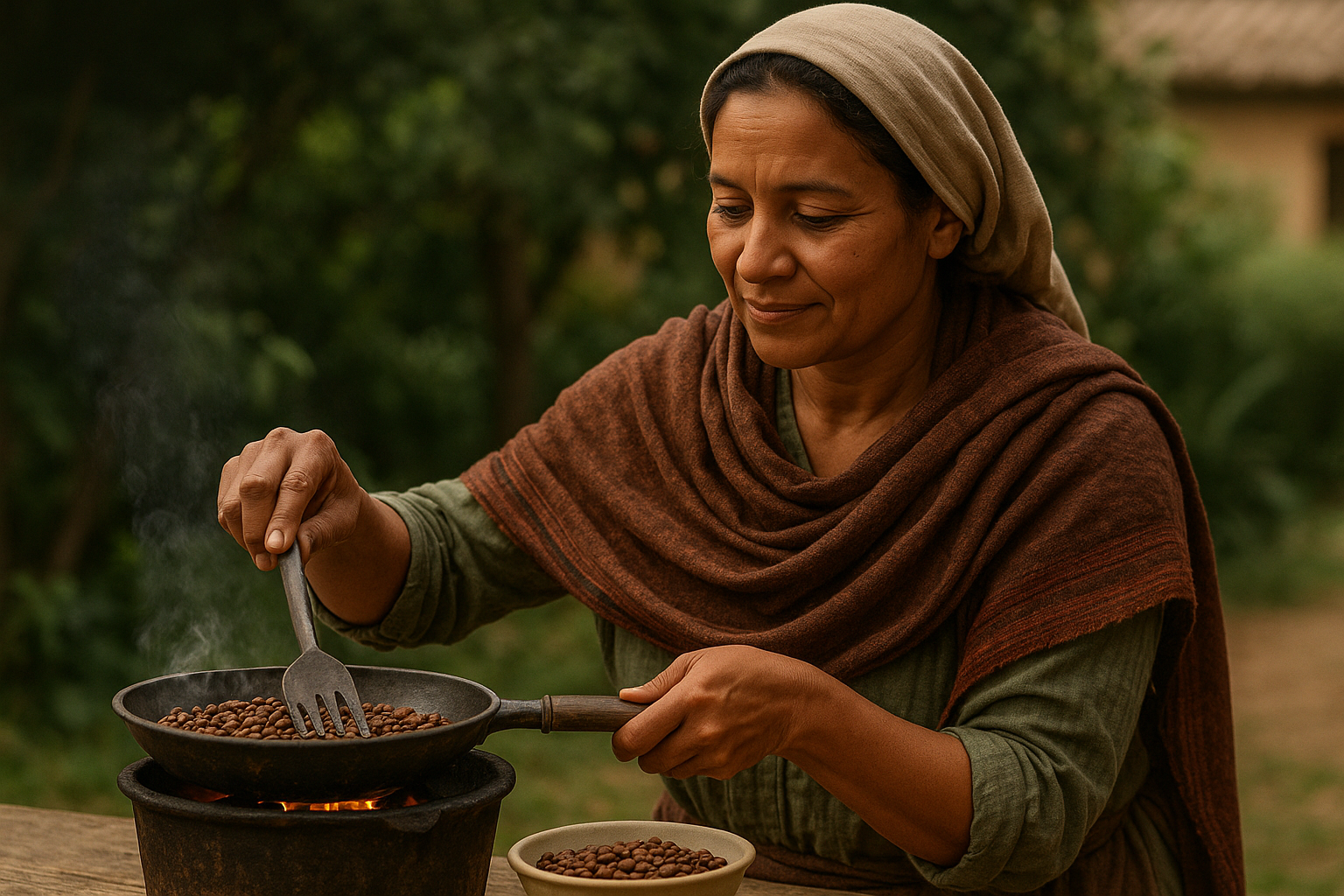
When we think about the story of coffee, we often picture explorers, merchants, kings, or baristas behind the counter. But what’s often left out of the picture is the essential role of women in every stage of coffee’s history.
From the plantations of Africa and Latin America to the counters of modern coffee shops, women have always been there—cultivating, processing, selling, and innovating within the world of coffee.
Despite systemic barriers and lack of recognition, women have shaped the global coffee industry with resilience, care, and strength.
This article highlights the vital contributions of women in coffee history, showing how they’ve impacted everything from agriculture to culture.
Women in Traditional Coffee Cultures
In Ethiopia, the birthplace of coffee, women have long held important roles in the domestic and ceremonial use of coffee.
The Ethiopian coffee ceremony is traditionally led by a woman. She roasts the beans, grinds them, brews them in a jebena (a traditional clay pot), and serves three rounds of coffee to guests.
This ritual is not only social but spiritual, and it reflects how deeply coffee is woven into community life—facilitated by women.
In many African and Middle Eastern cultures, coffee preparation is still seen as a symbol of hospitality, respect, and femininity.
Women have preserved these rituals for generations, keeping coffee culture alive.
Unrecognized Labor on Coffee Farms
Women make up nearly 70% of the labor force in coffee cultivation worldwide.
They plant, prune, fertilize, harvest, wash, and sort the beans—often by hand, often for long hours, and often for low or no pay.
In many coffee-growing countries, such as Brazil, Colombia, Kenya, Vietnam, and Honduras, women are the backbone of the farm.
But they rarely own land, control earnings, or have access to training and credit.
This labor imbalance is a major issue in the global coffee supply chain. While women do the bulk of the work, men often handle the selling and receive the income.
Still, change is happening.
Women as Coffee Producers and Entrepreneurs
Around the world, more women are stepping into leadership roles on coffee farms and in cooperatives.
They are becoming landowners, farm managers, and coffee entrepreneurs.
In Rwanda, the Musasa Dukundekawa Cooperative has led the way in women’s inclusion, offering training and financial support. In Colombia, women-led farms have earned recognition for producing high-quality specialty coffee.
Some organizations, like International Women’s Coffee Alliance (IWCA), support women in every part of the coffee value chain—offering them tools, education, and a platform for visibility.
When women lead farms, studies show that communities benefit: productivity increases, children’s education improves, and gender gaps begin to close.
Baristas and the Rise of the Female Coffee Professional
For much of the 20th century, the role of the barista was seen as male-dominated.
But in recent decades, women have reshaped the coffee service industry—from behind the bar to behind the business.
Today, women are baristas, café owners, roasters, Q-graders, and coffee trainers in countries around the globe.
In Scandinavia, Australia, Japan, and the United States, women have earned global recognition at coffee championships, representing their countries and raising standards of service and craft.
The specialty coffee movement has opened doors for women to move from behind the counter to running the entire shop—sometimes even roasting their own beans.
The Challenges Faced by Women in Coffee
Despite progress, women in coffee still face systemic challenges.
These include:
- Gender-based violence and harassment, especially in isolated rural areas
- Limited access to loans and land titles
- Exclusion from decision-making in cooperatives or trade negotiations
- Unequal pay and lack of promotion in cafés and retail chains
- Underrepresentation at conferences, panels, and industry leadership
Many of these issues are tied to cultural traditions, economic inequality, and lack of institutional support.
As coffee becomes more traceable and ethical sourcing grows in importance, shining a light on women’s roles has become a top priority for reformers.
The Impact of Fair Trade and Ethical Labels
The Fair Trade movement has had a mixed but meaningful impact on gender equity in coffee.
Fair Trade certification requires organizations to demonstrate democratic decision-making, which includes women’s representation.
While this hasn’t solved all problems, it has encouraged inclusion in cooperatives and made gender equity part of the conversation.
Other certifications—like Rainforest Alliance or Organic—are now integrating gender indicators into their audits.
Some roasters even go a step further, offering women-grown coffee, marketed to consumers who want to support gender equity directly.
Still, critics argue that more must be done to ensure these certifications lead to real empowerment, not just branding.
Women Roasters and Coffee Educators
In the roasting world—a space long dominated by men—women are now crafting profiles, running production lines, and educating the next generation of coffee professionals.
Organizations like She’s the Roaster, Barista Hustle, and The Chain Collaborative are helping women access training, mentorship, and funding to build their own brands.
In places like Berlin, Tokyo, Nairobi, and São Paulo, women are running independent roasteries that focus not just on flavor, but on ethics and transparency.
These women are reshaping the conversation around coffee—from one of volume and profit to one of values and quality.
Women in Coffee Science and Innovation
The future of coffee depends on science—especially in the face of climate change and crop disease.
Women researchers are leading projects in agronomy, genetics, and sustainability. They are developing disease-resistant coffee varieties, studying soil health, and creating new brewing technologies.
In institutions like World Coffee Research, CIAT, and the University of California, Davis, women are shaping the future of how coffee is grown, processed, and enjoyed.
Their work often goes unseen—but it’s essential to the survival of the industry.
The Cultural Representation of Women in Coffee
For decades, women have also been portrayed as symbols in coffee advertising—often reduced to passive images of domesticity or beauty.
Classic coffee ads in the 1950s and 60s depicted women serving their husbands or beaming over a pot of filter coffee.
These narratives ignored the actual work and leadership women were already providing in the industry.
Today, a new generation of women is reclaiming the narrative.
Through art, branding, writing, and public speaking, they are telling stories of strength, struggle, and pride—highlighting not only what women have done in coffee, but how their stories deserve to be told.
The Rise of Women-Focused Coffee Brands
In the specialty coffee world, several brands now center female leadership and female growers in their identity.
Examples include:
- Café Femenino (Latin America): A brand created by women farmers to control their own product
- Girls Who Grind Coffee (UK): A roastery that sources only from female producers
- Mujeres Cafeteras (Colombia): A collective focused on education and independence
These companies challenge traditional power structures and create new models for how coffee can be produced and sold—with equality at its heart.
Final Thoughts: Building an Equitable Coffee Future
The story of coffee is incomplete without women.
They have planted the seeds, carried the sacks, stirred the cups, and poured the lattes.
And now, they’re writing the next chapter.
An equitable coffee industry means recognizing women’s past contributions and actively supporting their future. It means fair pay, equal opportunity, safe working conditions, and shared leadership.
Whether you’re a consumer, roaster, café owner, or barista, your choices matter.
The next time you take a sip, consider who grew it, who processed it, and who made sure it reached your hands.
Chances are, a woman was involved—at every step of the way.
Marcelo Oliveira is a passionate coffee enthusiast and writer who explores every angle of the world’s favorite brew—from its rich history to modern brewing techniques. With a deep appreciation for both tradition and innovation, Marcelo brings clear, engaging insights to help readers enjoy coffee on a whole new level.