
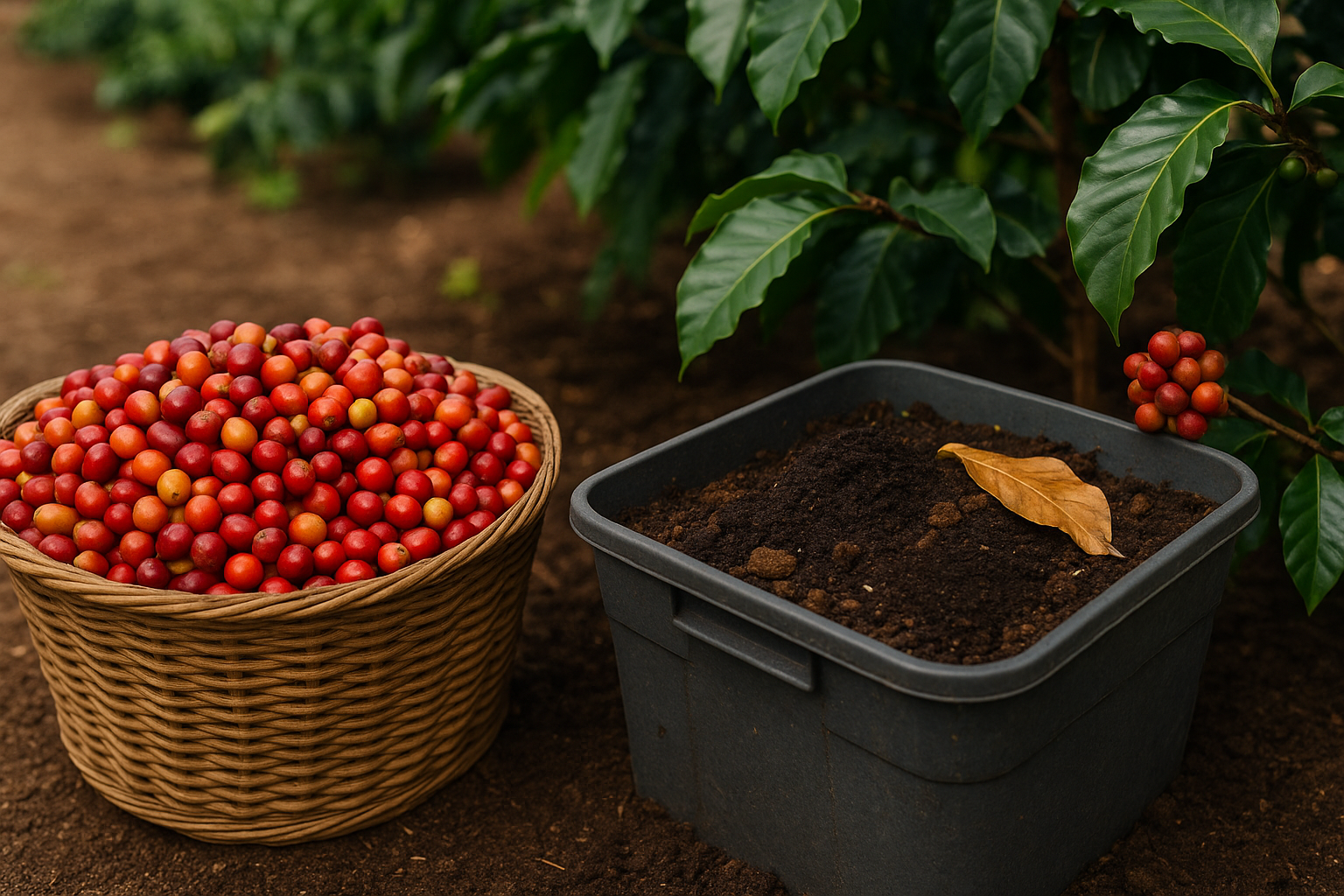
We often think of coffee as a finished product—something poured into a cup and enjoyed in the morning rush or a quiet afternoon.
But every bean has a story, and that story doesn’t begin in the café. It begins in the soil—and doesn’t end when the cup is empty.
Understanding the lifecycle of a sustainable coffee bean helps us appreciate the deep environmental, social, and economic impact behind every sip. From ethical farming practices to compostable waste, sustainability can—and should—be embedded in every stage of the coffee journey.
This article traces that journey step by step, revealing how conscious choices at each stage can lead to a more sustainable future for coffee and the planet.
Step 1: Choosing the Right Seed
The first step in the lifecycle of any coffee bean is selecting the right variety.
In sustainable farming, this choice is made not just for flavor but for climate resilience, disease resistance, and biodiversity.
Farmers increasingly choose heirloom or hybrid varieties that thrive in their specific ecosystems, require fewer chemical inputs, and resist common threats like leaf rust or drought.
The seed must be more than productive—it must be environmentally compatible.
Step 2: Cultivating with the Ecosystem in Mind
Once planted, the coffee seedling begins its journey in the soil.
Sustainable coffee farming avoids harmful practices like clear-cutting or monoculture. Instead, it encourages:
- Agroforestry, where coffee grows under shade trees
- Organic composting instead of chemical fertilizers
- Natural pest management using ecological balance
These techniques help preserve soil health, water quality, and surrounding habitats—while also improving the long-term productivity of the farm.
Farms that prioritize sustainability often become sanctuaries for birds, bees, and beneficial insects—creating a win-win for agriculture and nature.
Step 3: Ethical Labor and Community Impact
Sustainability is not just about the environment—it’s also about people.
Sustainable coffee farms invest in fair labor practices, offering safe working conditions, fair wages, and sometimes even profit-sharing models.
Many join cooperatives that provide education, healthcare, and leadership opportunities—especially for women and marginalized communities.
A truly sustainable coffee bean supports not only the land, but also the hands that grow and pick it.
Step 4: Responsible Harvesting and Processing
When the coffee cherries are ripe—usually once a year—they’re harvested either by hand or through selective mechanical processes.
In sustainable systems, selective picking ensures only ripe cherries are collected, which improves quality and reduces waste.
The next step—processing—is also critical.
There are three main processing methods:
- Washed (wet): Uses water to remove pulp
- Natural (dry): Dries whole cherries in the sun
- Honey (semi-washed): A hybrid method
Sustainable producers reduce water usage, recycle wastewater, and use solar drying instead of fossil fuels.
In some regions, coffee pulp is reused as compost or biofuel—turning waste into a resource.
Step 5: Transport with a Carbon-Conscious Mindset
Once processed and dried, the green coffee beans must travel.
Most coffee is shipped thousands of kilometers by truck, rail, and cargo ship. This stage accounts for a significant portion of the carbon footprint in coffee’s lifecycle.
To reduce this impact, sustainable cooperatives and importers:
- Use efficient shipping routes
- Consolidate loads
- Choose low-emission transport where possible
Some innovative companies now offset carbon emissions by investing in reforestation or switching to carbon-neutral logistics.
Step 6: Roasting for Impact, Not Just Flavor
Roasting is both an art and a science—but it’s also an energy-intensive process.
Many roasters now aim to make this stage more sustainable by:
- Using energy-efficient roasters
- Sourcing renewable electricity
- Recovering and reusing heat
- Repurposing coffee chaff (the outer skin of beans)
In addition, some roasters are creating circular systems, where coffee waste is turned into biogas or fertilizer—reducing dependence on fossil fuels.
Packaging also plays a role here. Truly sustainable coffee brands use compostable, recyclable, or reusable bags, often with minimal ink and adhesives.
Step 7: Retail and the Customer Experience
Whether sold in grocery stores, online shops, or cafés, the way coffee is marketed and served matters.
Sustainable brands:
- Share transparent sourcing stories
- Offer bulk refill stations
- Provide recyclable pods or capsules
- Use carbon-neutral e-commerce platforms
Cafés that serve sustainable coffee can amplify the impact by:
- Using reusable cups
- Offering plant-based milk options
- Composting coffee grounds and food waste
- Partnering with local, ethical producers
The retail experience can be just as important as the origin when it comes to reducing environmental harm.
Step 8: Brewing with Intention
Now the coffee reaches your home or office.
Even this final stage has sustainability choices:
- Use manual brewing methods like pour-over or French press instead of electric machines
- Avoid single-use pods unless they are truly compostable
- Choose filtered water instead of bottled
- Brew only what you’ll drink to reduce waste
Every decision, even at home, can reduce your cup’s carbon and water footprint.
Plus, a mindful brewing ritual connects us back to the farmers and ecosystems that made our coffee possible.
Step 9: Composting the Leftovers
Once the coffee is brewed, there’s still one more step: disposing of the grounds.
Rather than throwing them away, coffee grounds can be:
- Composted to enrich garden soil
- Used to grow mushrooms
- Turned into natural fertilizer for plants
- Mixed into beauty products as exfoliants
- Used in odor-absorbing sachets
Composting your grounds closes the loop in the coffee lifecycle—turning waste into growth.
Some municipalities even offer green waste collection for food scraps and grounds. If not, backyard composting is a simple and effective alternative.
The Role of Technology in the Coffee Lifecycle
Technology is playing a growing role in making every stage of coffee more sustainable.
Examples include:
- Blockchain traceability, which allows consumers to see exactly where their coffee came from
- Soil sensors that help farmers reduce over-irrigation
- Data analytics for smarter harvesting and drying
- Smart roasters that minimize emissions
Even apps that let consumers track the carbon footprint of their brew are now becoming common.
Tech is making it easier to understand and optimize every link in the coffee supply chain.
The Power of the Consumer
While producers and companies play a major role, you, the consumer, have enormous power.
Every purchase sends a signal. When you choose sustainable brands, support ethical cafés, and compost your grounds, you’re helping build a better system.
Look for labels like:
- Fair Trade
- Rainforest Alliance
- Certified Organic
- Direct Trade
But also dig deeper—read the brand’s story, ask questions, and share your findings with others.
Sustainability is a shared responsibility, and awareness is the first step.
Final Thoughts: A Circular Cup
Coffee is more than a drink—it’s a global network of people, plants, and processes.
A sustainable coffee bean doesn’t just happen by chance. It takes effort, innovation, and care at every stage—from seed selection to composting your grounds.
The beauty of the sustainable coffee lifecycle is that it’s circular. Nothing is wasted. Every part serves a purpose. And every person, from farmer to consumer, plays a role.
So next time you enjoy your brew, remember: the choices you make help shape the journey of the next bean—and the future of the planet.

Marcelo Oliveira is a passionate coffee enthusiast and writer who explores every angle of the world’s favorite brew—from its rich history to modern brewing techniques. With a deep appreciation for both tradition and innovation, Marcelo brings clear, engaging insights to help readers enjoy coffee on a whole new level.