
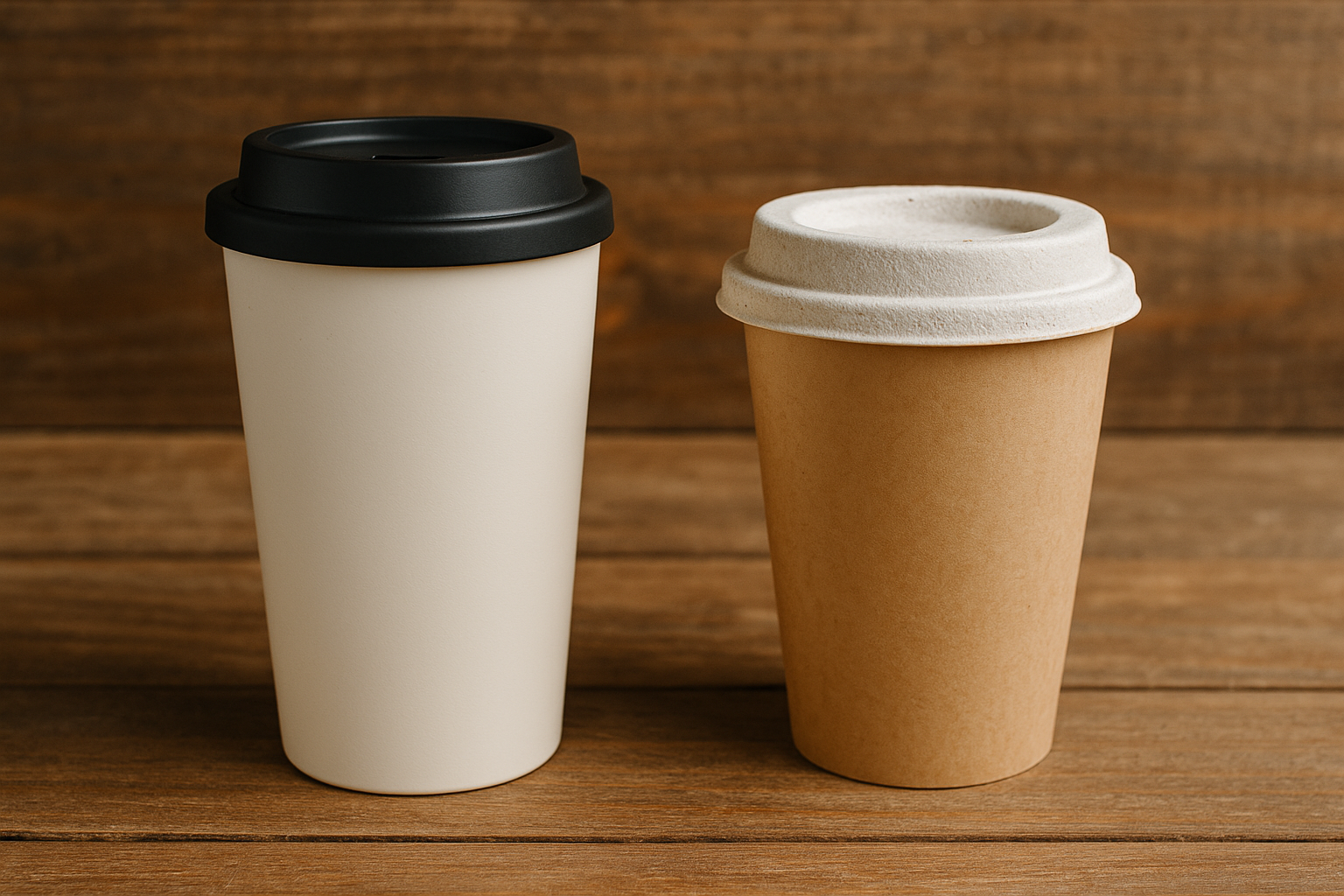
It’s a common dilemma for eco-conscious coffee drinkers: Should you bring your own reusable cup, or is it better to use a compostable one from the café?
At first glance, both options seem environmentally friendly. After all, they aim to reduce the waste associated with single-use plastic or paper cups.
But when you dig a little deeper, the answer isn’t so simple.
This article compares reusable cups and compostable cups across key environmental metrics—waste, energy use, emissions, and practicality—so you can make informed decisions about your daily coffee habit.
The Problem With Single-Use Coffee Cups
Before comparing alternatives, it’s important to understand why traditional single-use cups are such an issue.
Most paper coffee cups are lined with plastic (polyethylene) to prevent leaks. This lining makes them hard to recycle. As a result:
- Billions of cups end up in landfills each year
- Many are not biodegradable, even if labeled “eco-friendly”
- They require energy and raw materials to produce
In short, single-use cups create waste, emissions, and environmental harm—for a product used for minutes.
Now let’s explore the alternatives.
What Are Reusable Cups?
Reusable cups are made from durable materials like:
- Stainless steel
- Glass
- Ceramic
- Bamboo
- Recycled plastic
They’re designed to be washed and reused hundreds or even thousands of times.
Popular brands include KeepCup, Stojo, Hydro Flask, and Frank Green. Many cafés also sell branded versions of their own.
Some are collapsible or insulated to keep drinks warm longer.
What Are Compostable Cups?
Compostable cups are single-use containers made from plant-based materials like:
- PLA (polylactic acid) from corn starch
- Bagasse, a byproduct of sugarcane
- Recycled paperboard with compostable liners
The idea is that, unlike traditional cups, these will break down naturally under composting conditions, turning into soil-enriching compost.
They often carry labels like “100% compostable”, “biodegradable”, or “made from plants.”
But there’s a catch.
Compostable ≠ Composted
One of the biggest misconceptions is that “compostable” means it will break down in your backyard bin or in a landfill.
In reality:
- Most compostable cups require industrial composting facilities with high heat and controlled conditions
- If sent to landfill, they may not decompose at all—or worse, they may release methane
- Many municipal systems don’t accept compostable packaging in green bins
So unless your city or café actively collects and processes these cups properly, they may end up no better than plastic.
Environmental Comparison: Reusable vs. Compostable
Let’s break down the key sustainability factors.
1. Waste Reduction
Reusable cups generate no waste during normal use. One cup can replace hundreds or thousands of disposables.
Compostable cups still produce waste, even if it’s organic. And if not properly composted, that waste becomes just another piece of trash.
✅ Winner: Reusable
2. Carbon Emissions
Reusable cups have a higher initial carbon footprint due to manufacturing. For example:
- A stainless steel cup may take 20–50 uses to “break even” compared to a paper cup
- A glass or plastic cup may take fewer—about 10–20 uses
After that point, every use becomes carbon-negative compared to disposables.
Compostable cups have lower production emissions than plastic but are still single-use, requiring constant replacement.
✅ Winner: Reusable (with consistent use)
3. Water and Energy Use
Reusable cups require water and energy for washing—especially if done in commercial dishwashers.
However, this is still less resource-intensive than producing, transporting, and disposing of new cups daily.
Compostable cups use less water in disposal, but again, only if they’re actually composted.
✅ Winner: Tie (depends on usage habits)
4. Convenience
This is where compostable cups shine. They require no cleaning, no carrying, and no responsibility.
For people on the go or without access to washing stations, they offer a guilt-free alternative to plastic.
However, reusable cups are becoming easier to carry, with collapsible options and widespread café acceptance.
✅ Winner: Compostable (for convenience)
5. Infrastructure Compatibility
Reusable cups don’t rely on any special waste infrastructure—they just need a sink or dishwasher.
Compostable cups depend on proper waste collection and industrial composting, which is not available in many regions.
Without that infrastructure, they lose much of their environmental value.
✅ Winner: Reusable
Social and Business Impact
Many cafés now offer discounts to customers who bring their own cups—usually between $0.10 and $0.50 per drink.
This encourages repeat behavior and builds brand loyalty.
Some have switched entirely to compostable packaging to reduce their waste footprint. Others are piloting “cup exchange” programs, where customers borrow and return reusable cups.
From a branding perspective, sustainability sells—but only if backed by real impact, not greenwashing.
The Role of Consumer Behavior
The truth is, no cup is sustainable if it’s not used responsibly.
A reusable cup that sits in your cabinet unused has no impact. A compostable cup that ends up in landfill may do more harm than good.
Your daily habits matter more than the material itself.
Ask yourself:
- Will I remember to bring my cup every day?
- Do I live in a city that composts packaging?
- Can I wash my cup at work or school?
- Am I buying coffee so often that waste really adds up?
There’s no one-size-fits-all answer—but self-awareness is key.
The Café’s Responsibility
It’s not just up to consumers. Coffee shops also play a critical role in guiding sustainable behavior.
Here’s how cafés can help:
- Provide clear signage about composting options
- Offer cup rental or exchange programs
- Train staff to handle BYO cups properly and safely
- Choose compostable products that are certified and locally accepted
- Educate customers about their choices
Transparency builds trust—and avoids greenwashing accusations.
Innovations on the Horizon
The world of sustainable coffee cups is evolving rapidly.
1. Smart Cups
Some reusable cups now include NFC chips that track how often they’re used, offering rewards or discounts.
2. Cup-as-a-Service
Programs like HuskeeSwap or CupClub allow customers to borrow, return, and reuse cups across participating locations—no personal cup needed.
3. Edible Cups
Startups are creating cups made from biscuit or rice-based materials—drink the coffee, then eat the cup!
4. Bioplastic Advances
Next-gen compostable materials may soon break down in home compost bins, solving one of the biggest problems with current products.
These innovations aim to make sustainability seamless, fun, and scalable.
Final Verdict: Which Is Better?
If you’re looking for the most sustainable long-term option and can commit to regular use and cleaning, reusable cups are the clear winner.
They reduce waste, cut emissions, and save money over time.
However, if you’re traveling, forget your cup, or lack access to washing facilities, a certified compostable cup (with proper disposal) is still a better choice than plastic-lined disposables.
Ultimately, the best option is the one you’ll actually use consistently and correctly.
Final Thoughts: Small Choices, Big Impact
Your daily coffee habit may seem small—but when multiplied by millions of people, it has a massive impact.
By choosing the right cup and using it responsibly, you help reduce waste, support ethical businesses, and drive demand for better systems.
It’s not about being perfect. It’s about being intentional.
One cup at a time.

Marcelo Oliveira is a passionate coffee enthusiast and writer who explores every angle of the world’s favorite brew—from its rich history to modern brewing techniques. With a deep appreciation for both tradition and innovation, Marcelo brings clear, engaging insights to help readers enjoy coffee on a whole new level.