
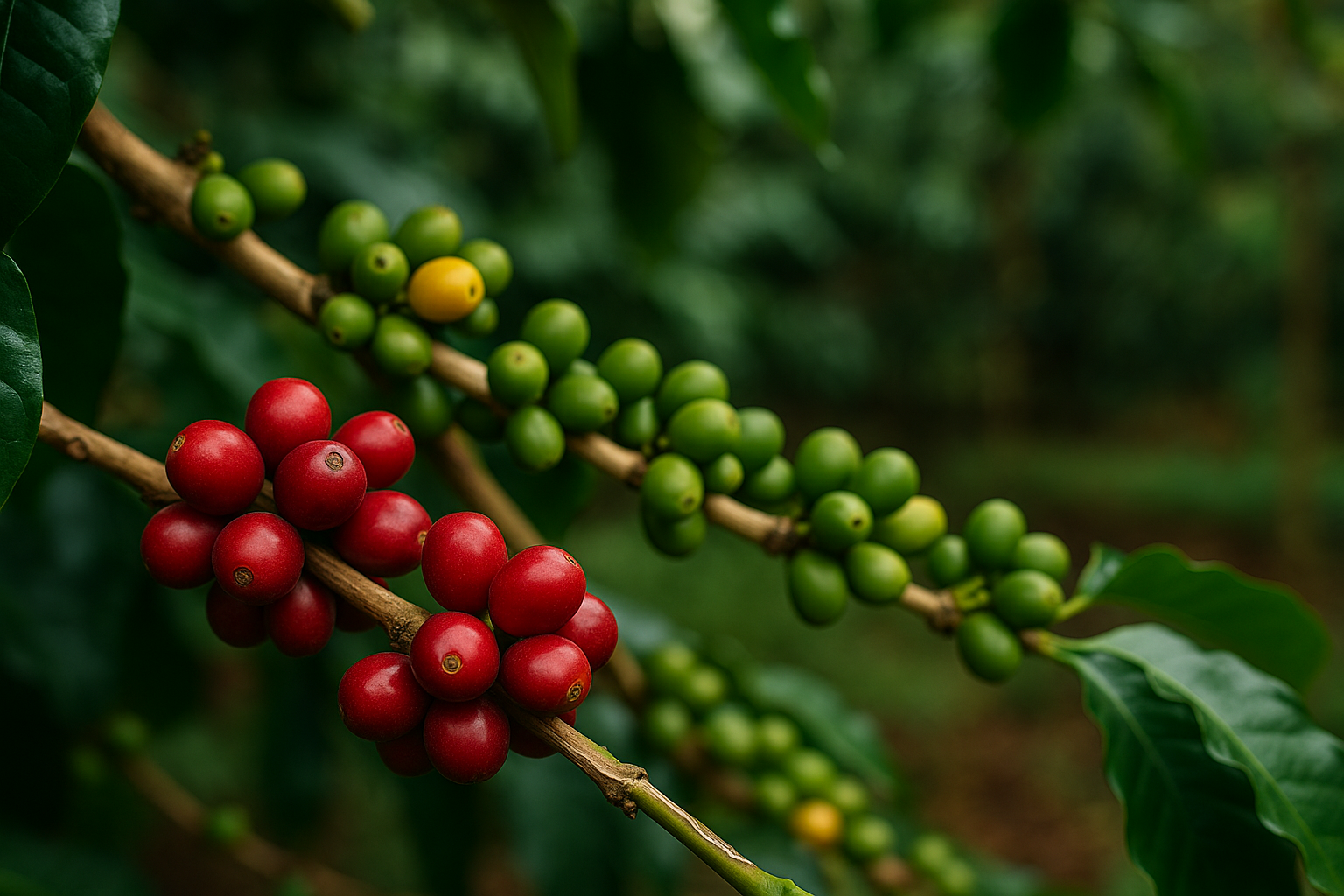
Coffee is more than a beverage—it’s a livelihood, a culture, and a global industry.
But it’s also under threat.
As the climate continues to shift, rising temperatures, unpredictable rainfall, and new pest outbreaks are putting coffee crops at serious risk. In fact, studies predict that up to 50% of current coffee-growing land may become unsuitable by 2050 if climate change continues unchecked.
To secure the future of coffee, researchers, farmers, and innovators are turning to a promising solution: climate-resilient coffee varieties.
This article explores what these varieties are, how they’re developed, why they matter, and what they mean for farmers, roasters, and coffee lovers around the world.
Why Coffee Is So Vulnerable to Climate Change
Coffee, especially Arabica, is a sensitive crop.
It thrives in specific altitudes, temperatures (between 18°C and 24°C), and rainfall patterns. When any of these conditions change—whether through heatwaves, droughts, or excessive rain—quality and yield drop sharply.
Climate change brings:
- Increased temperatures that stress the plant
- Unpredictable rainfall that disrupts flowering and fruit development
- Longer dry seasons, leading to drought
- Increased pests like the coffee berry borer and leaf rust
- Soil erosion and nutrient depletion
This makes traditional coffee farming increasingly unsustainable, especially for smallholder farmers with few resources.
What Are Climate-Resilient Coffee Varieties?
Climate-resilient coffee varieties are types of coffee that have been bred or selected for their ability to withstand environmental stress without sacrificing quality or yield.
They may be:
- Naturally occurring wild species
- Cross-breeds between Arabica and Robusta
- Cultivars developed through selective breeding or genetic research
The goal is to create plants that are more resistant to heat, drought, disease, and pests—while still producing high-quality beans for specialty and commercial markets.
Arabica vs. Robusta: The Genetic Trade-Off
There are two main species of coffee: Coffea arabica and Coffea canephora (commonly known as Robusta).
- Arabica: Known for its smooth, complex flavor. Grows at high altitudes. More vulnerable to climate stress and disease.
- Robusta: Hardier and more resilient. Can grow at lower elevations. More bitter and less aromatic.
Many climate-resilient varieties are hybrids—combining Arabica’s flavor with Robusta’s toughness.
The result is a new generation of plants that balance quality and durability.
Notable Climate-Resilient Coffee Varieties
Here are some of the most promising climate-resilient varieties being used or developed around the world:
1. Starmaya
- A hybrid between Marsellesa (Arabica) and a male-sterile plant
- Offers good cup quality
- Resistant to coffee leaf rust
- High-yield and adaptable to different climates
2. Centroamericano (H1)
- Hybrid of Sarchimor and Ethiopian varieties
- Excellent flavor and productivity
- Performs well under drought conditions
- Leaf rust-resistant
3. SL28 and SL34 (Kenya)
- Traditional cultivars known for high quality
- Moderate drought resistance
- Popular among specialty coffee producers
4. Catimor and Sarchimor
- Crosses between Arabica and Robusta lines
- Strong disease resistance
- Acceptable cup quality when well cultivated
5. Liberica and Excelsa
- Less common wild species
- Naturally adapted to warmer climates
- Potential for development as climate conditions shift
How Are These Varieties Developed?
Creating climate-resilient coffee is a long, careful process. It involves:
1. Selective Breeding
Researchers cross different coffee plants and select offspring with desired traits—like rust resistance or drought tolerance.
This process can take 10 to 20 years to bring a new variety to market.
2. Genetic Mapping
Using DNA analysis, scientists identify genes associated with resilience and target them in breeding programs.
This speeds up the process and improves accuracy.
3. Field Trials
New varieties are tested in real farms under different conditions to evaluate:
- Yield
- Disease resistance
- Cup quality
- Farmer usability
Only the best-performing varieties move forward.
4. Farmer Adoption and Training
Even the best plant won’t help if farmers don’t know how to grow it.
Organizations support farmers with training, seedlings, and tools to adopt new varieties successfully.
The Role of Genetic Diversity
One of the biggest problems with traditional coffee farming is the lack of genetic diversity.
Many farms rely on just a few varieties, making them highly vulnerable to disease or climate shocks.
By introducing climate-resilient and genetically diverse varieties, we build a stronger safety net.
Think of it like investing—diversification reduces risk.
Who Is Leading This Movement?
Several organizations and research institutions are pioneering the development of climate-resilient coffee:
- World Coffee Research (WCR): A global nonprofit coordinating trials and breeding programs
- International Center for Tropical Agriculture (CIAT)
- CATIE (Costa Rica): Focused on Central America
- National Coffee Institutes in Colombia, Ethiopia, Kenya, and Brazil
They work closely with:
- Universities
- Governments
- Cooperatives
- Private roasters and retailers
This collaboration ensures that science meets real-world needs.
Benefits for Farmers
Climate-resilient varieties offer more than just environmental advantages. They also provide:
- Stable incomes through consistent yields
- Lower costs due to reduced need for pesticides
- Market opportunities for specialty or certified coffee
- Empowerment through training and support programs
These factors are especially important for smallholders, who produce over 70% of the world’s coffee.
Consumer Impact: Why It Matters in Your Cup
You may not be a farmer, but your choices at the café or grocery store influence which practices and varieties succeed.
By supporting:
- Certified coffees (Organic, Rainforest Alliance, etc.)
- Brands that invest in resilient farming
- Traceable single-origin beans
- Producers using hybrid or wild varieties
…you contribute to a system that values sustainability over short-term gains.
Some climate-resilient coffees are already available in specialty markets. Look for beans labeled with the variety name or origin region—and don’t be afraid to ask your roaster or barista.
The Challenges Ahead
While the promise is great, there are still challenges:
1. Access to Seeds and Funding
Many small farmers lack the resources to buy or plant new varieties. Support from governments, NGOs, and the private sector is essential.
2. Market Acceptance
Some roasters and consumers are skeptical of hybrids, fearing lower quality. Education is needed to show that many new varieties produce excellent cups.
3. Knowledge Gaps
New plants require different care. Without training, farmers may struggle to get the best results.
4. Time
Breeding and adoption take years. Climate change is moving faster.
That’s why investment needs to happen now, not later.
Beyond the Bean: A Systemic Shift
Climate-resilient coffee is just one piece of the puzzle. Real sustainability requires change at every level:
- Agroforestry to protect ecosystems
- Carbon-neutral supply chains
- Equitable labor systems
- Consumer education
But strong, adaptable coffee plants are a foundational step—they make everything else possible.
Without them, there may be no coffee to improve.
Final Thoughts: Breeding Hope for the Future
Climate-resilient coffee varieties are more than scientific breakthroughs—they are acts of hope.
Hope that future generations will still enjoy the aroma of a fresh brew. Hope that farmers will thrive in changing environments. Hope that innovation and collaboration can overcome even the most daunting challenges.
As a consumer, you don’t have to understand the genetics to make a difference. Just support the people and companies working toward a more resilient, sustainable, and equitable coffee industry.
Your next cup could be a small act of climate action—and a taste of the future.

Marcelo Oliveira is a passionate coffee enthusiast and writer who explores every angle of the world’s favorite brew—from its rich history to modern brewing techniques. With a deep appreciation for both tradition and innovation, Marcelo brings clear, engaging insights to help readers enjoy coffee on a whole new level.