
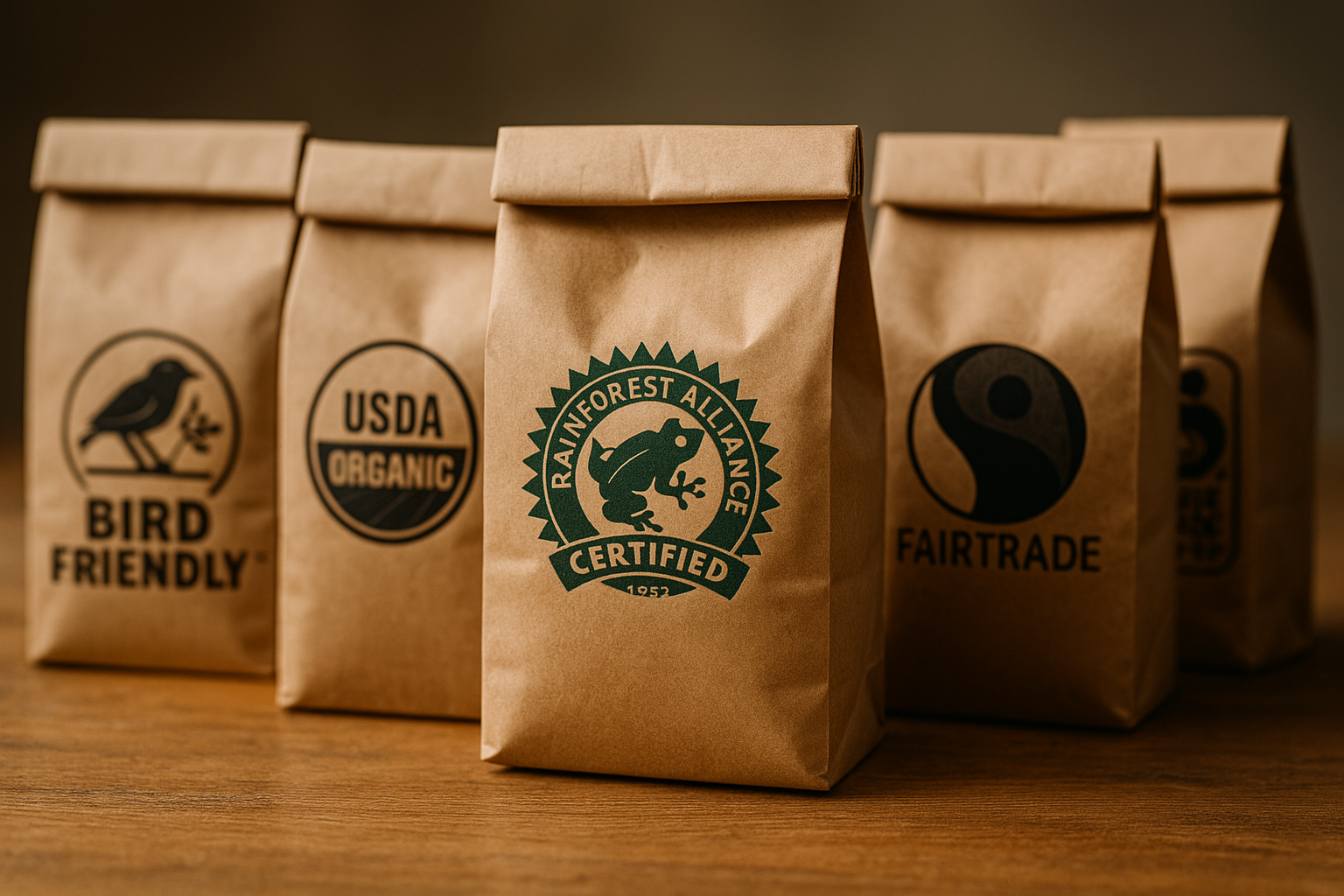
As you browse the shelves of your local grocery store or specialty café, you’ll likely see a range of logos and labels on coffee bags—Fair Trade, Organic, Rainforest Alliance, and more.
These certifications are meant to signal ethical and sustainable practices, offering reassurance that your coffee was produced in a way that respects the planet and the people behind the beans.
But with so many different seals, what do they actually mean? Are they truly making a difference, or just another form of greenwashing?
In this guide, we’ll break down the most common coffee certifications, explore what they stand for, and help you understand how to make more ethical and informed choices as a consumer.
Why Certifications Exist
The global coffee industry has a long and complicated history of:
- Environmental degradation
- Worker exploitation
- Unequal trade practices
- Opaque supply chains
To combat this, organizations created certification systems that promote:
- Sustainable farming
- Fair wages and safe working conditions
- Environmental protection
- Transparency
The idea is that by rewarding ethical producers with market access and price premiums, certifications can improve standards across the entire industry.
But the system isn’t perfect.
Common Coffee Certifications and What They Mean
Here’s a breakdown of the most widely recognized labels, what they represent, and their key strengths and limitations.
1. Fair Trade (Fairtrade International / Fair Trade USA)
Goal: Ensure better prices, decent working conditions, and fair terms of trade for farmers and workers.
Key Features:
- Minimum price guarantee (protects against market crashes)
- Fair Trade Premium (invested in community projects)
- Democratic cooperative structure
- Labor standards, including no forced or child labor
Pros:
- Offers a safety net for small producers
- Encourages long-term relationships
- Promotes social development
Cons:
- Limited reach—doesn’t always apply to larger farms
- Not always the highest quality beans
- Some roasters avoid it due to cost or bureaucracy
2. USDA Organic
Goal: Promote ecological balance and biodiversity through natural farming methods.
Key Features:
- No synthetic pesticides, fertilizers, or GMOs
- Must maintain healthy soil and water systems
- Requires a 3-year transition period for certification
- Annual inspections and audits
Pros:
- Encourages environmentally friendly practices
- Often paired with shade-grown or regenerative farming
- Strong consumer recognition
Cons:
- Certification can be costly and time-consuming
- Focuses on inputs, not labor or trade ethics
- Doesn’t guarantee fair wages
3. Rainforest Alliance / UTZ Certified
Goal: Create a better future for people and nature through sustainable farming and business practices.
Key Features:
- Environmental criteria (deforestation-free, wildlife protection)
- Social standards (worker rights, gender equity)
- Climate-smart agriculture practices
- Economic sustainability goals
Pros:
- Balances environmental and social factors
- Flexible, data-driven certification model
- Widely used in large-scale supply chains
Cons:
- Critics say it can be too lenient
- Certification doesn’t always result in price premiums
- Merged with UTZ in 2018—some confusion remains
4. Bird Friendly (Smithsonian Migratory Bird Center)
Goal: Preserve bird habitats and biodiversity through shade-grown coffee systems.
Key Features:
- Requires USDA Organic certification
- Must meet strict shade, canopy, and biodiversity criteria
- Emphasizes forest preservation and ecosystem health
Pros:
- Highest environmental standards
- Protects migratory birds and forest ecosystems
- Encourages traditional farming methods
Cons:
- Niche certification, less known by the public
- Fewer producers qualify
- Limited supply in global markets
5. Direct Trade (Unregulated Term)
Goal: Foster transparent, mutually beneficial relationships between roasters and producers.
Key Features:
- No formal certification body
- Roasters deal directly with farms
- Often includes higher prices, pre-financing, and long-term contracts
- Emphasis on quality and traceability
Pros:
- Can provide better prices and relationships
- Often results in unique, high-quality beans
- Encourages transparency and storytelling
Cons:
- No standard definition—varies by brand
- Consumers must trust the roaster’s claims
- Not always audited or third-party verified
What Certifications Don’t Tell You
While certifications are valuable tools, they don’t always capture the full story behind your coffee. Here are a few limitations:
1. They Can Be Cost-Prohibitive
For smallholder farmers, certification fees, inspections, and compliance can be expensive and time-consuming.
Some ethical producers may farm organically or fairly but lack the resources to get certified.
2. They Don’t Always Guarantee High Wages
Even Fair Trade doesn’t guarantee a living wage. Minimum prices help, but market fluctuations, climate challenges, and cost of living vary widely by region.
3. Not All Certifications Are Equal
Some labels are stricter and more transparent than others. It’s important to research the standards behind the seal.
4. They Focus on Compliance, Not Collaboration
Certifications often measure whether a farm meets certain standards—but they don’t always invest in building capacity or fostering innovation.
How to Read Between the Labels
As a consumer, how can you use certifications wisely without falling for greenwashing?
Here are a few tips:
1. Look for Multiple Certifications
When a coffee is both Organic and Fair Trade, or Rainforest Alliance and Bird Friendly, that’s a good sign of well-rounded ethics.
2. Research the Brand
Visit the company’s website. Do they share:
- Who grows their coffee?
- What certifications they use?
- How they invest in communities?
Transparency matters.
3. Ask Questions
At cafés or online, ask about:
- Origin
- Certification
- Producer partnerships
- Environmental practices
Baristas and sellers who care will be happy to answer.
4. Buy From Responsible Roasters
Smaller specialty roasters often work directly with producers and publish detailed sourcing info. They may not have official certifications—but their impact is still real.
5. Consider the Whole Supply Chain
A coffee could be Organic at the farm, but still packaged in plastic, shipped by air, or brewed with disposables.
True sustainability includes packaging, transport, and consumption.
Ethical Coffee Without Certification?
Yes, it exists.
Many farmers use regenerative, organic, or fair labor practices without seeking certification. Why?
- Certification costs are too high
- They sell directly to roasters or consumers
- Local systems offer more meaningful support
This is why relationships and traceability matter as much as logos.
If a brand shares clear, detailed info about where and how they source—without hiding behind vague claims—they may be just as ethical as certified coffee.
The Future of Ethical Certification
Certifications are evolving to meet consumer expectations and industry needs.
Expect to see:
- More transparent auditing and public scorecards
- Technology-driven traceability (e.g., blockchain)
- Focus on living income, not just minimum price
- Integrated climate standards, like carbon neutrality
- Producer-led certifications, giving more power to farmers
Ultimately, the goal is not just to meet standards, but to raise them—creating a coffee industry that is fair, inclusive, and resilient.
Final Thoughts: Make Your Cup Count
Every coffee label tells a story—but you have to read beyond the logo.
By understanding what certifications mean (and don’t mean), you empower yourself to support producers who truly care for the land and their communities.
Don’t aim for perfection. Aim for progress.
Buy coffee with intention. Ask questions. Share what you learn.
Because when consumers demand better, the industry listens—and the change begins at the source.

Marcelo Oliveira is a passionate coffee enthusiast and writer who explores every angle of the world’s favorite brew—from its rich history to modern brewing techniques. With a deep appreciation for both tradition and innovation, Marcelo brings clear, engaging insights to help readers enjoy coffee on a whole new level.