
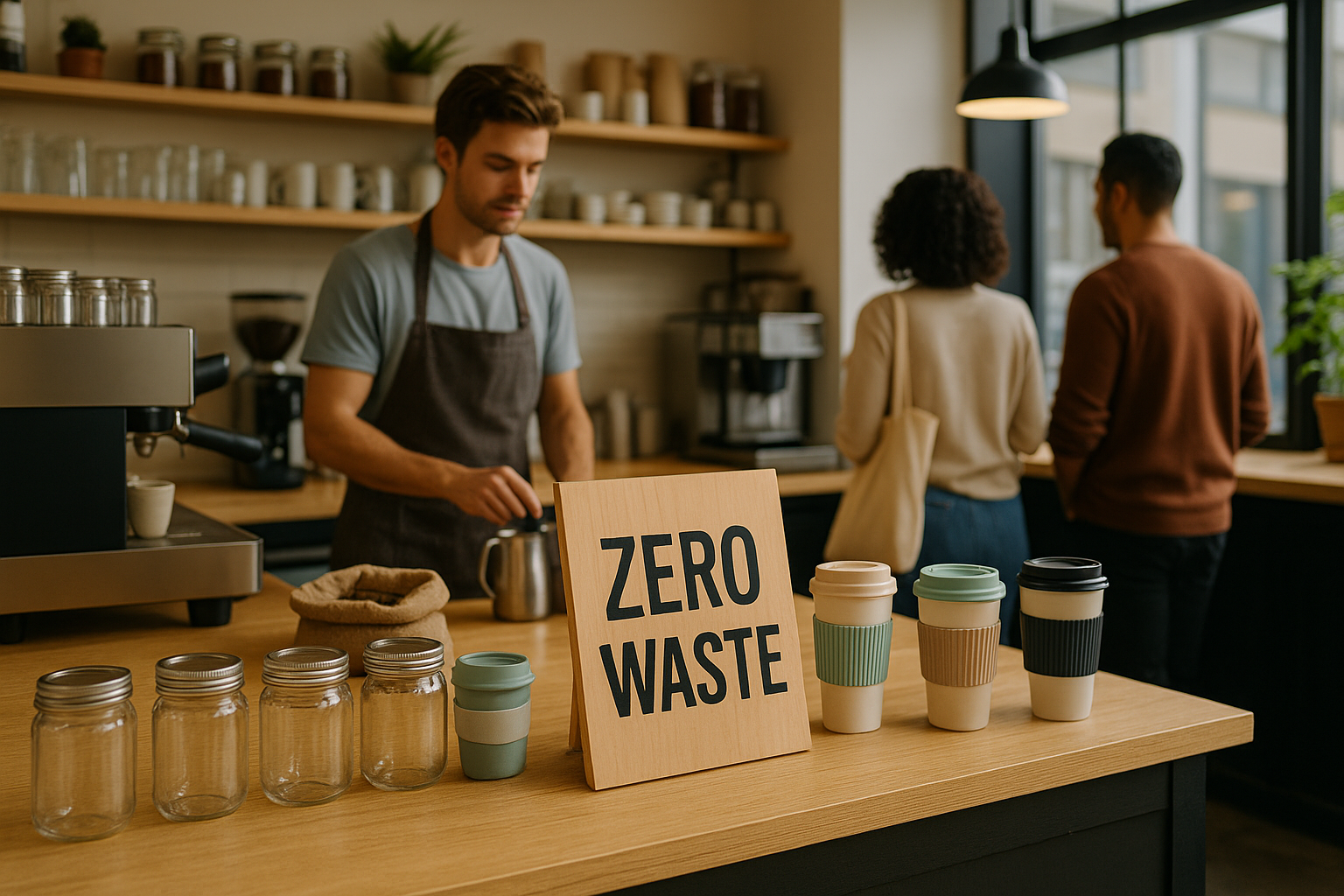
Coffee shops are more than places to get your caffeine fix—they’re community hubs, creative spaces, and, increasingly, leaders in sustainability.
As environmental concerns rise and consumers demand greener choices, a new movement has emerged: the zero-waste café.
These businesses are rethinking everything from coffee grounds to cup lids, aiming to operate with no landfill waste at all.
In this article, we’ll explore what zero-waste cafés are, how they work, and how this movement is changing the future of coffee—one cup at a time.
What Does “Zero Waste” Mean?
The Zero Waste International Alliance defines zero waste as:
“The conservation of all resources by means of responsible production, consumption, reuse, and recovery of products, packaging, and materials, without burning and with no discharges to land, water, or air.”
In simpler terms, it means nothing goes to landfill or incineration.
For a café, this means rethinking:
- How coffee is sourced and served
- What materials are used
- How waste is handled
- How customers engage with the process
It’s not about perfection—it’s about progress and intentional design.
Why Cafés Produce So Much Waste
Traditional cafés generate a surprising amount of daily waste, including:
- Disposable cups and lids
- Plastic straws and stirrers
- Paper napkins and food wrappers
- Food scraps and unsold items
- Coffee grounds and milk containers
Globally, it’s estimated that over 500 billion disposable cups are used each year—most of which are not recyclable.
Add to that the packaging from ingredients, single-use accessories, and cleaning supplies, and you get a significant environmental footprint.
What Makes a Café “Zero Waste”?
A zero-waste café commits to eliminating landfill waste through redesign, reuse, composting, and recycling.
Here’s how they do it:
1. Ditching Single-Use Cups
Reusable cups are encouraged or required. Options include:
- BYO cup incentives
- Cup rental or exchange programs
- On-site mug libraries for dine-in
Some cafés even go completely disposable-free—no paper cups, period.
2. Composting Coffee Grounds and Food Waste
Instead of sending food scraps to landfill, zero-waste cafés:
- Compost on-site or through local partners
- Donate coffee grounds for gardening
- Turn waste into biofuel or fertilizer
Coffee grounds can also be used to grow mushrooms, make soaps, or even create sustainable textiles.
3. Sustainable Packaging
When packaging is necessary, it’s:
- Compostable (e.g. PLA, bagasse)
- Recyclable (aluminum or glass)
- Reusable (glass jars, tins, cloth wraps)
Some cafés allow customers to bring their own containers for take-out, beans, or milk.
4. Sourcing Responsibly
Zero-waste cafés often align with ethical sourcing practices:
- Direct trade or traceable supply chains
- Organic or shade-grown coffee
- Local, seasonal, low-waste ingredients for food
This reduces not only physical waste but also carbon emissions from transportation and packaging.
5. Reusing and Upcycling
From furniture to décor, many cafés repurpose:
- Old wood and pallets for tables
- Mason jars for serving
- Milk cartons for planters
- Broken ceramics for mosaics
It’s not just eco-conscious—it’s creative.
6. Customer Engagement
Customers are part of the solution.
Cafés educate visitors about waste, host sustainability workshops, and clearly label bins to promote correct sorting.
Some even track and display their waste stats to encourage transparency and accountability.
Real-World Examples of Zero-Waste Cafés
Here are a few cafés around the world leading the way:
📍 Nada Café – Vancouver, Canada
- Offers zero-waste grocery options alongside coffee
- No single-use packaging
- Refill stations for coffee beans and tea
📍 Fumbally Café – Dublin, Ireland
- Focus on composting and reusable everything
- Community garden on-site
- Hosts zero-waste events and educational workshops
📍 TOMA Café – Madrid, Spain
- Uses local suppliers and composts all grounds
- Sells beans in refillable tins
- Collaborates with artists for upcycled designs
📍 Zero Waste Coffee – Melbourne, Australia
- Built entirely with reclaimed materials
- Uses solar energy and rainwater collection
- Coffee served only in reusable cups or mugs
These cafés prove that zero-waste isn’t just a trend—it’s a practical and profitable model.
Benefits of Going Zero Waste
Going zero-waste offers more than just environmental perks:
✅ Cost Savings
- Reusable systems reduce long-term packaging costs
- Composting reduces landfill fees
✅ Brand Loyalty
- Customers value sustainability
- Zero-waste cafés attract conscious consumers and media attention
✅ Community Connection
- Waste reduction often involves local farms, artists, and nonprofits
- Builds strong community ties and partnerships
✅ Healthier Environment
- Less plastic = less microplastic in food and drink
- Cleaner spaces, fewer toxins
✅ Staff Empowerment
- Employees are part of a mission-driven workplace
- Sustainability becomes part of daily operations and culture
Challenges and How to Overcome Them
Transitioning to zero-waste isn’t always easy. Here’s what café owners need to consider:
1. Upfront Costs
- Compost bins, cup rental systems, and reusable items require investment
- Solution: Apply for sustainability grants, partner with local organizations, or start small and scale up
2. Customer Resistance
- Some customers may forget their cup or resist change
- Solution: Offer incentives, educate politely, and create easy alternatives (like cup libraries)
3. Infrastructure Gaps
- Not all cities offer composting or recycling services
- Solution: Partner with private composters or build in-house systems
4. Supply Chain Limitations
- Ethical and zero-waste products can be harder to source
- Solution: Build strong relationships with local, sustainable suppliers
How You Can Support Zero-Waste Cafés
Even if you’re not a café owner, you can be part of the movement:
☕ Bring Your Own Cup and Container
Get in the habit of carrying a reusable cup, bottle, and food container. It’s one of the easiest ways to cut your personal waste.
📍 Choose Cafés That Align With Your Values
Support businesses that go the extra mile for sustainability. Leave reviews, spread the word, and help them thrive.
♻️ Sort Your Waste Correctly
Pay attention to bin labels and don’t contaminate recycling or compost with non-compostable items.
🌱 Ask Questions and Offer Suggestions
Engage with café owners or baristas. Your feedback could encourage new zero-waste initiatives.
The Bigger Picture: Waste-Free Cities and Circular Economies
Zero-waste cafés are part of a larger vision—a circular economy where materials are reused, recycled, and regenerated instead of discarded.
Cities like San Francisco, Amsterdam, and Tokyo are creating policies and infrastructure that support waste-free businesses.
When cafés lead by example, they:
- Shift public expectations
- Inspire legislation
- Build community resilience
They’re not just making better coffee—they’re making a better world.
Final Thoughts: Every Cup Counts
Zero-waste cafés prove that sustainability doesn’t have to be boring or expensive—it can be beautiful, innovative, and delicious.
By reimagining how coffee is served and consumed, these cafés are helping reshape our relationship with consumption and waste.
So next time you head to your local coffee spot, ask yourself:
- Where did this cup come from?
- Where will it go?
- How can I make a better choice?
Because the real buzz doesn’t come from caffeine—it comes from doing better, together.

Marcelo Oliveira is a passionate coffee enthusiast and writer who explores every angle of the world’s favorite brew—from its rich history to modern brewing techniques. With a deep appreciation for both tradition and innovation, Marcelo brings clear, engaging insights to help readers enjoy coffee on a whole new level.