
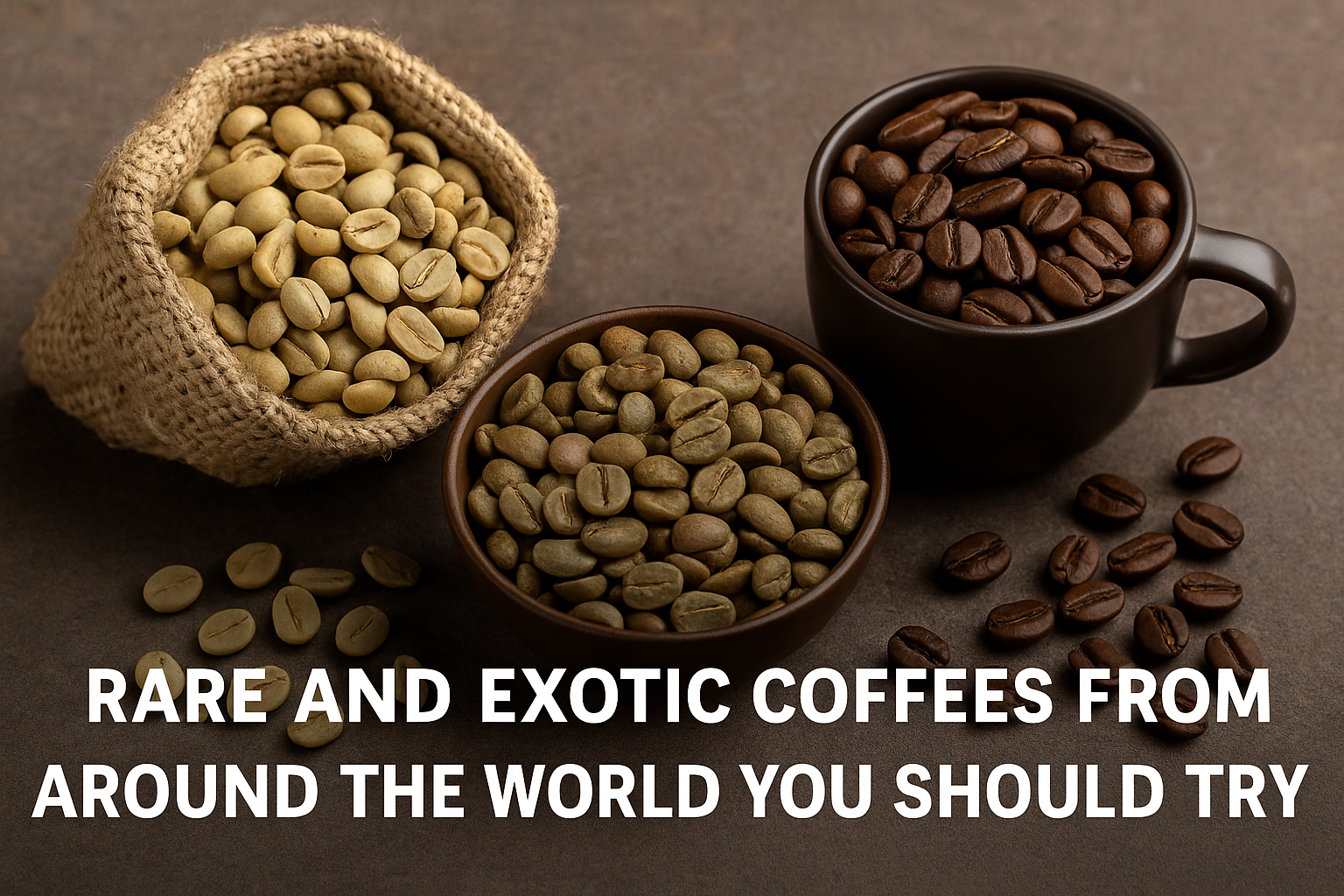
Coffee is one of the most consumed beverages globally, but beyond the daily espresso or drip brew, there’s an entire world of rare and exotic coffees that most people have never tasted.
These aren’t your average supermarket blends. They come from remote farms, unique microclimates, or involve unusual processing methods. Some are limited by nature, others by design.
In this article, we’ll take you on a global journey through some of the rarest and most exotic coffees, why they’re special, and what kind of flavors you can expect when you finally get your hands on a cup.
What Makes a Coffee Rare?
Not every expensive or foreign coffee qualifies as rare or exotic. Truly rare coffees usually have one or more of the following characteristics:
- Limited production: Very small harvests or micro-lots
- Unique origin: Remote or less accessible regions
- Uncommon varietals: Genetic coffee types not widely grown
- Experimental processing: Innovative fermentation or drying methods
- Exceptional flavor profiles: Aromatic, complex, or unexpected
Let’s explore some of the most fascinating coffees from every corner of the world.
1. Panama Geisha (Gesha)
Perhaps the most famous rare coffee, Geisha from Panama has built a reputation as a luxury item in the coffee world. It originated in Ethiopia but gained fame after being cultivated at high altitudes in Panama’s Boquete region.
Why it’s rare:
- Grows at high altitudes with low yield
- Requires meticulous care and processing
- Often auctioned in limited micro-lots
Flavor profile:
- Floral (jasmine, rose)
- Bright acidity
- Notes of tropical fruits, bergamot, and black tea
Expect to pay a premium—but the experience is unforgettable.
2. Kopi Luwak (Civet Coffee)
Originating in Indonesia, Kopi Luwak is known as one of the most controversial and unusual coffees.
It’s made from coffee cherries eaten and digested by civet cats. The beans pass through the animal’s system, undergo fermentation, and are collected from the droppings.
Why it’s rare:
- Limited production
- Involves a unique biological process
- Traditionally collected from wild civets
Flavor profile:
- Low acidity
- Earthy and smooth
- Mild chocolate and caramel notes
Important: Ethical concerns surround mass production, especially regarding animal treatment. Always choose wild-sourced, certified ethical versions.
3. Black Ivory Coffee (Thailand)
This Thai coffee follows a similar principle as Kopi Luwak, but uses elephants instead of civets. The beans are fed to elephants, fermented in their digestive system, and collected afterward.
Why it’s rare:
- Extremely limited production
- High cost of care and ethical sourcing
- Labor-intensive collection process
Flavor profile:
- Ultra smooth
- Hints of chocolate, spice, and malt
- Low bitterness
Often served in luxury resorts, it’s among the most expensive coffees in the world.
4. Hacienda La Esmeralda Special Reserve (Panama)
From the same farm that brought Geisha to fame, this exclusive reserve is separated into nano-lots and carefully processed.
Why it’s rare:
- Ultra-limited release
- Only available through auction
- Traceable to specific sections of the farm
Flavor profile:
- Complex florals
- Tropical fruit
- Elegant and refined structure
If you’re a serious collector or competitor, this coffee is a must-try.
5. St. Helena Coffee (South Atlantic Ocean)
Yes, coffee grows on the island of St. Helena, located in the middle of the South Atlantic Ocean. Made famous by Napoleon, who praised it during his exile, this coffee has gained a small but passionate following.
Why it’s rare:
- Grown on a remote volcanic island
- Very low annual yield
- Expensive to export
Flavor profile:
- Bright and clean
- Hints of citrus and spice
- Medium body
Its uniqueness lies in its location, heritage, and clean cup.
6. Jamaica Blue Mountain Coffee
Grown in the Blue Mountains of Jamaica, this coffee is known for its smoothness and gentle flavor. It’s one of the most counterfeited coffees due to its fame.
Why it’s rare:
- Limited designated growing region
- Strict quality controls
- Popular export (mostly to Japan)
Flavor profile:
- Smooth and mild
- Subtle floral notes
- Slightly sweet with balanced acidity
It’s not the most intense coffee—but prized for its balance and elegance.
7. Yemen Mocha Matari
Yemen has been growing coffee for centuries. Its Mocha Matari is among the oldest and most distinctive origins in the world.
Why it’s rare:
- Ancient varietals
- Harsh, dry terrain
- Political instability limits exports
Flavor profile:
- Wine-like acidity
- Dry cocoa and spice
- Dense, syrupy body
Yemen coffees offer a rustic and historical flavor, vastly different from modern washed coffees.
8. Ethiopian Wild Forest Coffees
Some coffees in Ethiopia still grow wild, especially in regions like Kaffa, the birthplace of Arabica.
These are often foraged from native forests, not cultivated in rows or managed plantations.
Why it’s rare:
- Naturally grown in biodiverse forests
- Handpicked with minimal intervention
- Heirloom and genetically diverse beans
Flavor profile:
- Wild florals and herbs
- Vibrant acidity
- Layers of stone fruit, tea, and citrus
They’re a sensory trip into coffee’s ancestral roots.
9. Finca El Injerto Peaberry (Guatemala)
Peaberries are rare mutations where only one bean forms inside the cherry instead of two. Finca El Injerto produces a peaberry Geisha that wins awards regularly.
Why it’s rare:
- Naturally occurring (only ~5% of harvest)
- Sorted by hand
- From an award-winning estate
Flavor profile:
- Sweet and lively
- Peach, lime, floral hints
- Bright and sparkling finish
Peaberries are said to roast more evenly and deliver a concentrated flavor.
10. Sulawesi Toraja Kalossi (Indonesia)
Grown in the highlands of Sulawesi, this coffee is lesser known than Sumatra or Java but offers an exotic twist.
Why it’s rare:
- Remote mountain farms
- Unique wet-hulling process
- Grown by smallholder producers
Flavor profile:
- Earthy, spicy, rich
- Notes of pipe tobacco, cedar, dark chocolate
- Full-bodied and intense
Perfect for those who enjoy deep, rustic flavors with a strong personality.
How to Buy Rare Coffees
Finding rare coffee requires more than a trip to your grocery store. Here’s how to seek it out:
- Specialty roasters: Look for roasters who work directly with farms or bid in auctions.
- Subscription services: Some offer rotating rare coffees monthly.
- Competitions: Keep an eye on Barista Championship winners—many use exotic beans.
- Online marketplaces: Trusted platforms like Trade, Bean Box, or Roast often feature micro-lots.
- Travel cafés: If you’re in cities with a strong coffee culture, visit cafés that feature guest roasters.
Always check for traceability, roast date, and roast level when buying high-end beans.
Are Rare Coffees Worth It?
That depends on your priorities.
If you drink coffee purely for caffeine or convenience, rare coffees may seem overpriced.
But if you’re curious about flavor exploration, origin stories, and sensory experiences, they’re a unique indulgence.
Just like wine or whisky, rare coffees offer insight into craftsmanship, culture, and nature.
You don’t need to drink them daily. Save them for special moments—or treat yourself to a tasting flight with friends.
How to Brew Exotic Coffees
To get the most out of rare beans:
- Use filtered water
- Use a scale to measure dose and water
- Grind just before brewing
- Stick to manual methods: V60, Chemex, AeroPress
- Start with a 1:16 ratio (1g of coffee per 16g of water)
- Allow it to cool slightly before tasting
Don’t mix it with milk or sugar on the first try. Taste it black and slow to appreciate its depth.
Final Thoughts: Expand Your Coffee World
Rare and exotic coffees open up a new dimension of coffee appreciation. They remind us that coffee isn’t just a beverage—it’s an agricultural art form, rooted in geography, culture, and passion.
Whether it’s a \$5 cup of wild Ethiopian beans or a once-in-a-lifetime taste of Geisha from Panama, every rare coffee tells a story worth sipping slowly.
So take a break from the ordinary. Try something bold, unique, and beautiful.
Your taste buds will thank you.
Marcelo Oliveira is a passionate coffee enthusiast and writer who explores every angle of the world’s favorite brew—from its rich history to modern brewing techniques. With a deep appreciation for both tradition and innovation, Marcelo brings clear, engaging insights to help readers enjoy coffee on a whole new level.