
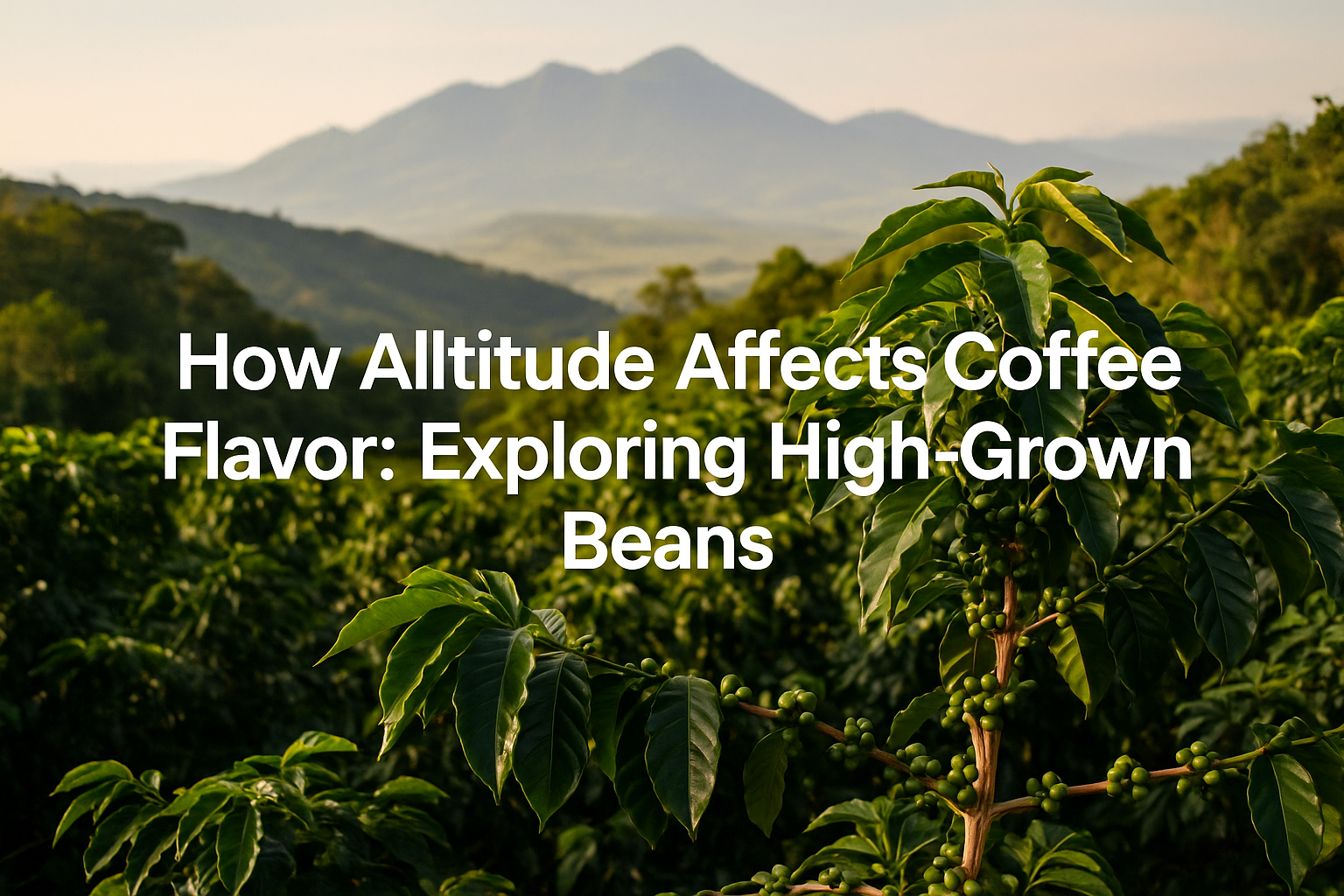
When it comes to coffee, terms like “high altitude”, “shade-grown”, or “grown at 1,800 meters above sea level” appear frequently on packaging. But what does altitude really mean for your cup?
Does it actually change the taste of the coffee? Why are high-grown beans often more expensive or sought after?
In this article, we’ll break down the science and farming behind altitude, how it influences coffee quality, and what it means for the flavors in your daily brew.
What Does “Altitude” Mean in Coffee?
In the coffee world, altitude refers to the elevation above sea level where the coffee is grown. It’s usually measured in meters or feet.
Coffee grows in what’s known as the “Coffee Belt”, a band of tropical regions between the Tropic of Cancer and the Tropic of Capricorn. Within that belt, altitude becomes a major differentiator.
In general:
- Low altitude: Below 1,000 meters (3,280 ft)
- Medium altitude: 1,000–1,500 meters (3,280–4,920 ft)
- High altitude: Above 1,500 meters (4,920 ft)
The higher the altitude, the more likely the coffee will develop a complex, bright flavor. But it’s not just elevation—it’s about how elevation affects temperature, growth speed, and bean structure.
Why Higher Elevation Matters
There are three main reasons altitude has such a strong effect on coffee flavor:
1. Slower Maturation
At higher altitudes, the air is cooler. This causes coffee cherries to ripen more slowly, giving them more time to develop sugars and complex acids.
Slower ripening = more flavor development.
This process also leads to denser beans, which are preferred in specialty coffee because they roast more evenly and retain more flavor.
2. Cooler Temperatures
Cool nights and mild days stress the coffee plant in just the right way. The stress triggers the plant to concentrate its energy into developing flavorful compounds in the beans.
Consistent, moderate temperatures also help prevent defects and diseases.
3. Better Drainage and Less Oxygen
Higher altitudes usually have rockier soil, which drains water better. This limits excessive moisture, reducing the risk of rot or mold.
There’s also less oxygen at higher elevations, which can influence the metabolism of the coffee plant, subtly affecting its chemistry and resulting flavor.
Flavor Differences by Elevation
Altitude isn’t everything—but it’s one of the biggest contributors to how a coffee tastes. Let’s break down the general flavor profiles by altitude.
Low Altitude Coffee (<1,000 m)
- Grows faster
- Larger beans with lower density
- Milder or flatter flavors
- Low acidity
- Often chocolatey, nutty, or earthy
- Common in: parts of Brazil, Indonesia
These coffees are typically good for dark roasts, espresso blends, and budget-friendly beans. They’re smooth and accessible, but not as complex.
Medium Altitude Coffee (1,000–1,500 m)
- Balanced growth speed
- Moderate density
- Good acidity and sweetness
- Notes like caramel, citrus, mild fruits
- Common in: Honduras, El Salvador, India
These coffees offer more character while remaining versatile. Great for filter brewing and medium roasts.
High Altitude Coffee (>1,500 m)
- Slow growth, small but dense beans
- High acidity
- Complex flavor notes: floral, fruity, tea-like
- Clean cup with bright aromas
- Common in: Ethiopia, Colombia, Guatemala, Panama
These are the coffees used in competitions, limited-edition roasts, and premium offerings. Their vibrant profiles appeal to enthusiasts and professionals.
High Altitude Coffees You Should Know
Here are a few well-known coffees from high elevations and what makes them stand out.
Ethiopia Yirgacheffe (1,700–2,200 m)
- Washed or natural processed
- Notes of jasmine, lemon, and black tea
- High clarity and floral elegance
Panama Geisha (1,400–1,800 m)
- Complex tropical flavors, very aromatic
- Notes of mango, papaya, bergamot
- Often auctioned at high prices
Colombia Nariño (1,800–2,200 m)
- Grown on steep Andean slopes
- Bright acidity with red fruits and caramel
- Balanced and juicy mouthfeel
Guatemala Huehuetenango (1,600–2,000 m)
- Rich, fruity coffees with spice
- Notes of cherry, chocolate, and citrus
- Great sweetness and smooth finish
How Altitude Affects Coffee Bean Structure
The beans grown at higher altitudes are smaller but denser. That’s because they mature slowly and absorb more nutrients.
Denser beans tend to:
- Roast more evenly
- Withstand heat better
- Retain more flavor compounds
When roasted properly, high-altitude beans offer more complexity and better balance than their lowland counterparts.
Roasters often adjust their roast profiles to suit the density. High-grown beans typically require slower, gentler roasting to preserve their delicate notes.
Challenges of Growing Coffee at High Altitude
While high altitude brings better flavor, it also comes with more risks and challenges:
- Steep terrain makes harvesting labor-intensive
- Low temperatures increase frost risk
- Access difficulties for transport and infrastructure
- Limited mechanization due to geography
- Lower yields, which raises production costs
Farmers working in high altitudes often rely on hand-picking, manual processing, and small-scale production. This attention to detail contributes to quality—but also to higher prices.
Is Higher Always Better?
Not necessarily.
While altitude is important, other factors also play a role, such as:
- The varietal of coffee
- The skill of the farmer
- Processing methods
- Roast and brew technique
A coffee grown at 1,200 meters by an expert producer might outperform one grown at 1,800 meters without proper care.
Still, altitude is a reliable indicator of potential quality—especially when comparing unknown coffees on a shelf.
How to Identify High-Altitude Coffee
You can often spot high-altitude beans by checking the label. Look for:
- Exact elevation listed in meters or feet
- Terms like “high-grown,” “SHG,” “Strictly High Grown,” or “Altitude-grown”
- Mention of specific regions known for elevation (e.g., Sidamo, Tarrazú, Huehuetenango)
If a bag says “SHG” or “Strictly High Grown,” it usually means the coffee was grown above 1,200 meters—a good sign of quality.
Altitude and Roast Level: What to Expect
High-altitude coffees are often roasted light to medium to preserve their brightness and floral/fruity notes.
- Light roast: Brings out acidity and complexity
- Medium roast: Balances sweetness and body
- Dark roast: May overpower delicate flavors
If you’re buying high-grown beans, try brewing them with a pour-over, Chemex, or Aeropress to showcase their nuances.
Avoid aggressive brewing methods like espresso unless you enjoy bright, tangy shots.
The Impact of Climate Change
Altitude is becoming even more important due to climate change. As global temperatures rise, lower elevation farms are becoming too hot for quality Arabica production.
This is forcing producers to:
- Move to higher altitudes
- Switch to hardier varietals
- Rethink processing and harvesting strategies
Some traditional coffee regions may disappear or shift completely within the next few decades.
Sustainable farming practices and reforestation are being explored to help protect high-altitude ecosystems.
What This Means for Coffee Lovers
As a coffee drinker, understanding altitude can help you:
- Choose coffees that match your flavor preferences
- Support high-quality, sustainable farming
- Appreciate the hard work behind your cup
If you enjoy bright, floral, fruity, and complex coffee, try beans from 1,500 meters or higher. These offer a more layered, aromatic experience.
If you prefer chocolatey, nutty, mellow cups, a medium-altitude or even low-altitude coffee might suit you better.
Final Thoughts: A Journey to the Top
Altitude is more than just a number on a label. It’s a powerful force that shapes the flavor, quality, and character of your coffee.
From the cool mountains of Ethiopia to the volcanic highlands of Panama, high-grown beans represent some of the most exciting coffees available today.
By learning how altitude influences your brew, you gain a deeper appreciation for what’s in your cup—and the journey it took to get there.
Next up: Article #4 – “Rare and Exotic Coffees from Around the World You Should Try”
(Starting now)

Marcelo Oliveira is a passionate coffee enthusiast and writer who explores every angle of the world’s favorite brew—from its rich history to modern brewing techniques. With a deep appreciation for both tradition and innovation, Marcelo brings clear, engaging insights to help readers enjoy coffee on a whole new level.