
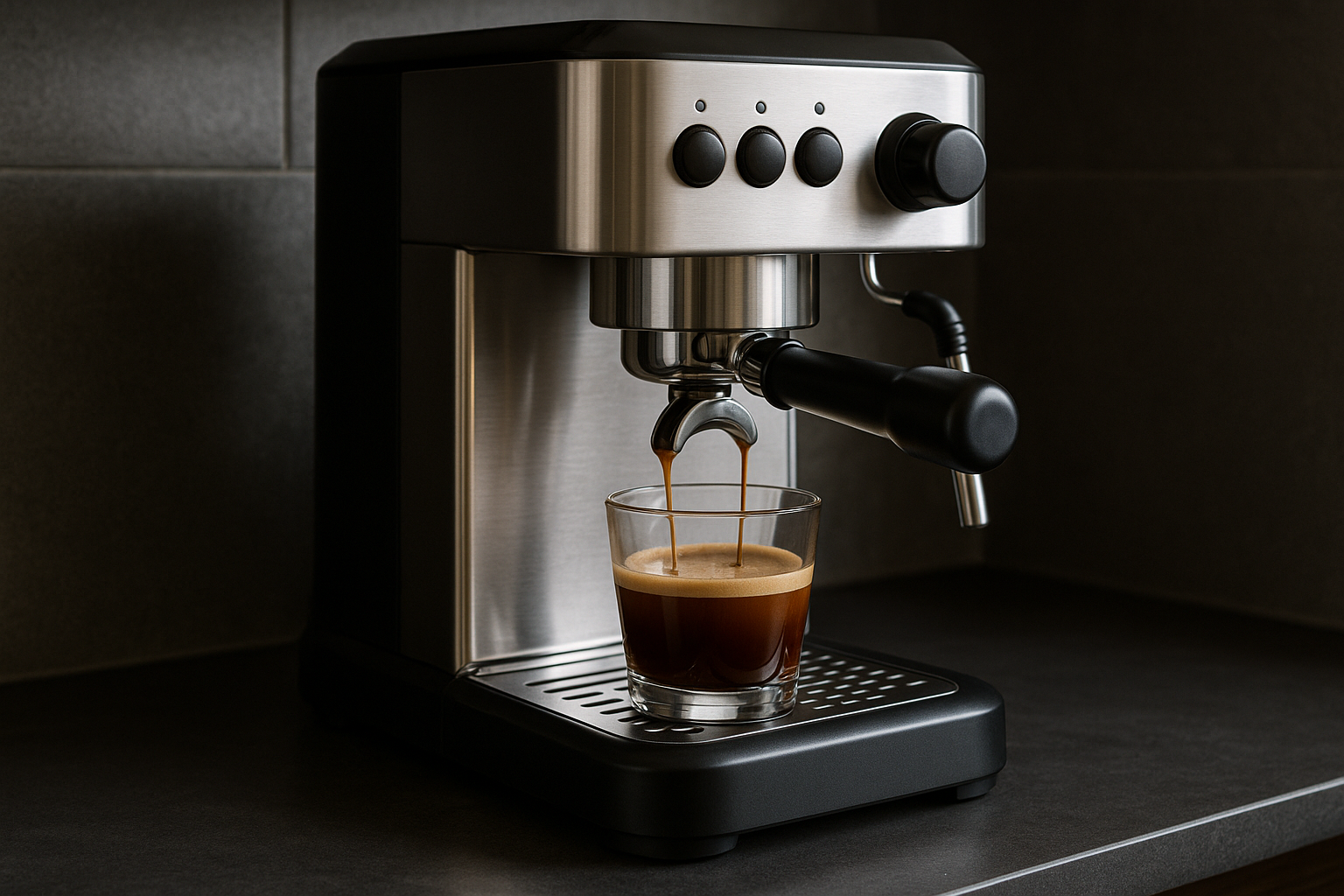
Buying an espresso machine can feel overwhelming. With so many models, features, and price points on the market in 2025, how do you know what truly matters?
Whether you’re a beginner home barista or upgrading your current setup, the key is to focus on the features that directly impact your coffee quality, convenience, and budget.
In this guide, we’ll break down the most important espresso machine features to consider in 2025, helping you invest wisely—without getting distracted by marketing hype.
Why the Right Features Matter
An espresso machine is more than just an appliance. It’s a tool that determines:
- How consistent your shots are
- How much control you have over brewing
- How easy it is to steam milk
- How long your machine will last
Choosing the right features can save you time, money, and frustration in the long run.
1. Boiler Type: Single vs Dual vs Heat Exchange
The boiler system controls water temperature—crucial for brewing and steaming.
🟩 Single Boiler
- One boiler handles both brewing and steaming
- You must wait between brewing and steaming
- Ideal for beginners and small budgets
✅ Best for: casual home users who mainly drink straight espresso
🟨 Heat Exchange (HX) Boiler
- Uses one boiler, but can brew and steam at the same time
- Faster workflow
- More temperature stability than single boilers
✅ Best for: intermediate users or small households making lattes or cappuccinos
🟦 Dual Boiler
- Two separate boilers: one for brewing, one for steaming
- Precise temperature control and no waiting time
- Higher cost, more maintenance
✅ Best for: serious home baristas or prosumer setups
2025 Tip: Many mid-range machines now offer affordable heat exchange or compact dual-boiler systems.
2. PID Temperature Control
PID (Proportional-Integral-Derivative) technology helps maintain consistent brew temperature, which is critical for shot quality.
Without PID, water temperature can fluctuate by several degrees, affecting flavor.
Look for machines with:
- Digital temperature control
- Adjustable brew temp settings
- Real-time displays
✅ Why it matters: Stability = better extraction = better espresso
3. Pressure Control and Gauges
Espresso is brewed at high pressure—typically around 9 bars. But not all machines hit or maintain this correctly.
Features to look for:
- Pump type (rotary pumps are quieter and more stable than vibration pumps)
- Pressure gauge (helps monitor performance)
- Pressure profiling (advanced control of pressure curves)
✅ Bonus: Machines with manual levers or pressure control let you experiment with different extraction styles.
2025 Tip: More machines now offer adjustable pressure settings for home baristas who want to fine-tune every shot.
4. Portafilter Size and Build Quality
A 58mm commercial-style portafilter is ideal. It allows for:
- Better consistency
- Compatibility with tampers and accessories
- Upgradability (e.g., bottomless portafilters)
Some cheaper machines use 51mm or pressurized baskets, which limit control and quality.
✅ Look for: solid metal construction, ergonomic handles, and non-pressurized baskets
5. Milk Frothing Capabilities
If you enjoy milk drinks, steaming power is essential.
Features that affect milk frothing:
- Steam wand design (articulating wands are easier to use)
- Boiler power (affects steam strength)
- Steam tip holes (more holes = faster frothing)
In 2025, even some entry-level machines now come with powerful microfoam steam wands, allowing you to create latte art at home.
✅ Avoid: plastic wands or “froth assist” attachments—they often lead to poor texture
6. Ease of Use and Cleaning
Some espresso machines have steep learning curves. Others are plug-and-play.
Features that improve ease of use:
- Programmable shot volumes
- Clear displays or touchscreens
- Removable drip trays and water tanks
- Auto-cleaning cycles
If you’re new to espresso, choose a machine that guides you through the process or automates repetitive tasks.
✅ Tip: Look for removable group heads or simple backflushing procedures for easier maintenance.
7. Size and Countertop Footprint
Not all kitchens can accommodate a large prosumer setup.
Measure your space and consider:
- Width and depth
- Clearance above for water refills
- Placement of steam wand and drip tray
Compact machines in 2025 offer surprising performance without taking over your counter.
✅ Also consider weight—especially if you plan to move the machine regularly.
8. Smart Features and App Connectivity
Some modern machines now come with Bluetooth or Wi-Fi connectivity, allowing you to:
- Start preheating remotely
- Adjust temperature and pre-infusion
- Track shot history and stats
While not essential, these smart features can be fun and useful for tech-savvy coffee lovers.
✅ Look for: intuitive apps that don’t overcomplicate basic tasks
9. Build Materials and Aesthetics
Durability is directly tied to materials.
High-quality espresso machines often feature:
- Stainless steel housing
- Metal group heads and steam knobs
- Copper or brass boilers
Plastic-heavy machines may feel flimsy and break down faster.
Aesthetics also matter—especially if your machine is a kitchen centerpiece. In 2025, many manufacturers offer stylish color options and minimalist designs.
✅ Tip: Buy from brands with available replacement parts and long-term support
10. Brand Reputation and Warranty
Stick with trusted brands that offer:
- Clear warranties (1–3 years standard)
- Responsive customer service
- Available parts and accessories
- Strong online communities for support
Popular home and prosumer brands in 2025 include:
- Breville/Sage
- Rancilio
- Lelit
- Profitec
- Gaggia
- ECM
- Rocket Espresso
✅ Avoid obscure brands with no service network or support.
Bonus: Useful Upgrades and Accessories
Once you have the right machine, the following upgrades can improve your coffee even more:
- High-quality burr grinder
- Precision tamper
- Distribution tool (WDT)
- Bottomless portafilter
- Scale with timer
- Knock box and cleaning supplies
Remember: Grind quality matters as much as the machine. Never underestimate your grinder’s role.
Best Machines by Category (2025 Quick Picks)
Here’s a quick summary of strong picks for different users:
🔰 Beginners (under $500)
- Gaggia Classic Evo Pro
- Breville Bambino Plus
- DeLonghi Dedica Arte
☕ Intermediate (~$1,000)
- Rancilio Silvia Pro X
- Lelit Victoria
- Breville Dual Boiler
🧠 Advanced ($1,500+)
- Profitec Pro 300 (dual boiler)
- ECM Classika PID
- Rocket Appartamento TCA
Each of these offers a balance of value, performance, and reliability in its category.
Final Thoughts: Spend Where It Counts
With so many machines and features available in 2025, it’s easy to get distracted by bells and whistles.
But the truth is, a great espresso machine should do three things well:
- Hold consistent temperature and pressure
- Allow you to control variables
- Last for years with proper care
Don’t overpay for touchscreen gimmicks if you care about flavor. But don’t skimp on critical features like PID or steam power if you love milk drinks.
Start with your needs, your space, and your routine. Let that guide your purchase.
Because the right machine isn’t just an upgrade—it’s the start of a much better coffee life.

Marcelo Oliveira is a passionate coffee enthusiast and writer who explores every angle of the world’s favorite brew—from its rich history to modern brewing techniques. With a deep appreciation for both tradition and innovation, Marcelo brings clear, engaging insights to help readers enjoy coffee on a whole new level.