
Coffee is one of the most complex beverages in the world, boasting over 800 aromatic compounds—more than wine. Yet, to many drinkers, it all just tastes like… coffee.
The good news? Developing a refined coffee palate is not a talent you’re born with—it’s a skill you can cultivate over time with intentional practice and the right approach.
Whether you’re a casual enthusiast, an aspiring barista, or a home brewer looking to get more out of every cup, this guide will walk you through how to build your coffee tasting palate—from your very first slurp to recognizing subtle floral notes, acidity levels, and body with confidence.
Why Train Your Palate?
Training your palate allows you to experience coffee more fully and deeply. But beyond enjoyment, it also:
- Improves brewing skills by helping you detect over- or under-extraction.
- Guides buying decisions, especially when selecting beans from different origins or roast profiles.
- Elevates appreciation of small-scale producers and processing methods.
- Bridges the gap between casual drinker and professional barista or Q grader.
It’s like moving from hearing music to understanding harmony, tone, and rhythm. Coffee becomes more than a drink—it becomes a sensory language.
Understanding the Basics of Flavor in Coffee
Before diving into tasting techniques, it’s important to understand the key dimensions that make up flavor:
1. Aroma
What you smell—before and during drinking. Aroma contributes significantly to perceived flavor. Think of notes like chocolate, berries, nuts, or citrus.
2. Taste
These are sensations on the tongue, including:
- Sweetness
- Bitterness
- Acidity
- Saltiness
- Umami (rare in coffee)
3. Body
The texture or weight of the coffee in your mouth—thin, creamy, oily, or heavy.
4. Aftertaste
The flavors that linger after swallowing. It can be clean, sour, dry, or rich.
5. Balance
How all the elements (sweetness, acidity, bitterness, body) work together.
These are the foundation of any tasting process, and mastering them begins with learning how to notice them.
Start with a Clean Slate
Developing a palate is like learning a new language—you need clarity and focus. Here are tips to prepare:
- Avoid brushing your teeth or chewing gum before tasting.
- Don’t eat spicy or strongly flavored foods within an hour.
- Use clean, filtered water to brew your coffee.
- Stay hydrated—dry mouth reduces tasting sensitivity.
- Taste in a quiet, distraction-free space when possible.
Creating ideal tasting conditions will help your brain register and remember flavors more effectively.
Step-by-Step Guide to Tasting Coffee
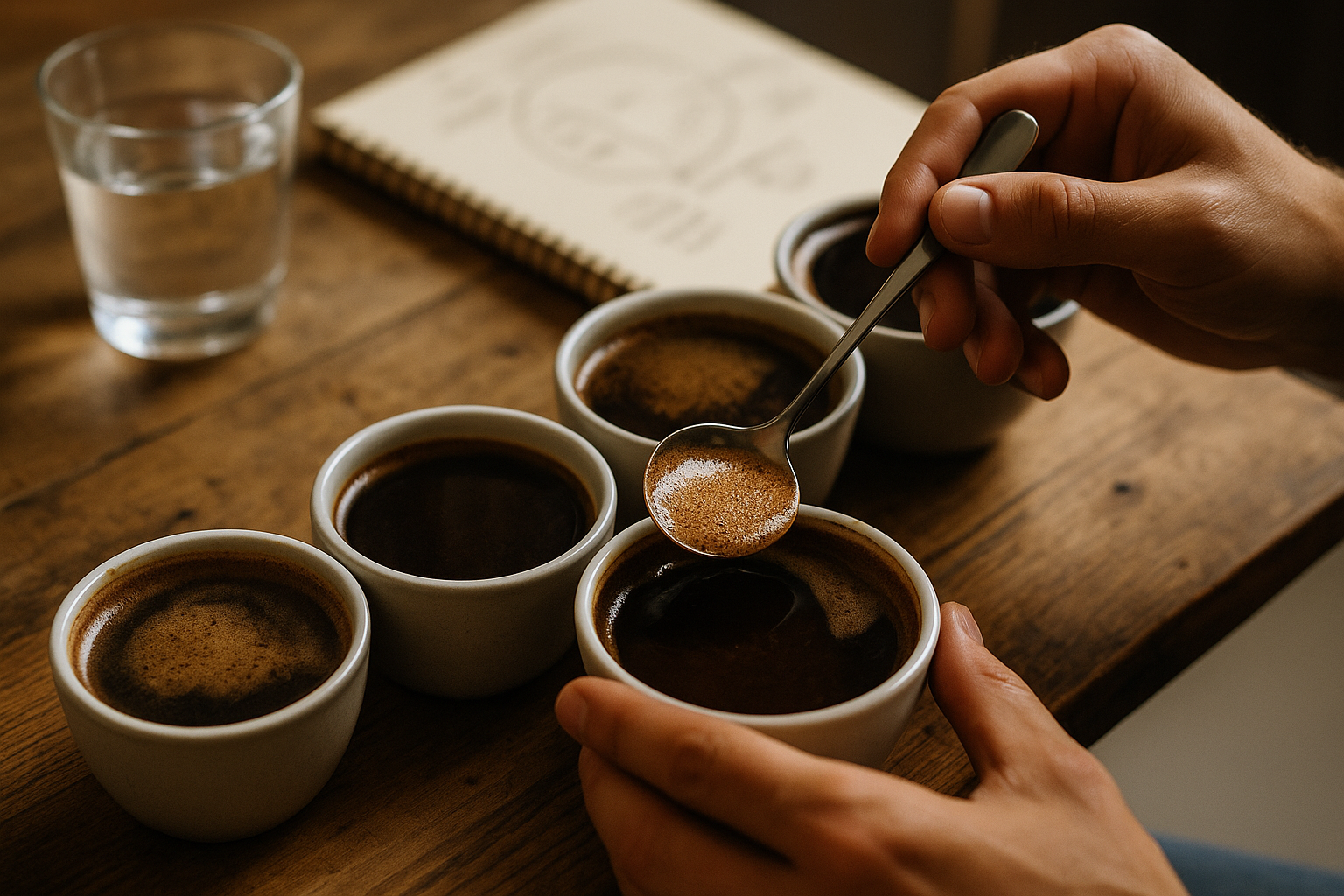
Let’s break down the tasting process into manageable steps, often used by coffee professionals during a “cupping” session.
Step 1: Smell the Dry Grounds
Before adding water, inhale deeply.
- What do you notice? Nuts? Fruit? Earthiness?
- Is the smell strong or faint?
This first impression will give clues about the bean’s origin, roast, and freshness.
Step 2: Smell the Wet Grounds
Once you add hot water and break the crust with a spoon, inhale again.
- This moment releases volatile aromatics.
- You might notice sweet, sour, or savory elements not present before.
This is known as the “bloom,” and it’s when many aromas peak.
Step 3: Slurp!
Take a spoonful of coffee and slurp it vigorously across your tongue.
Why slurp?
- It aerates the liquid and spreads it across your taste buds.
- It releases aromas into your nose, enhancing flavor perception.
Don’t worry about etiquette—slurping is expected in serious coffee tasting.
Step 4: Note Your Impressions
Ask yourself:
- Is it sweet, sour, or bitter?
- What kind of acidity is it? Bright and citrusy, or smooth and tart?
- Does it remind you of any fruits, spices, or nuts?
- How does it feel in your mouth—light like tea or heavy like cream?
- Does the flavor linger? Is the aftertaste pleasant?
The key is paying attention and articulating what you sense, even if you’re unsure. Over time, your brain will develop flavor memory.
Tools That Help You Learn Faster
You don’t need a lab to train your palate, but these tools can make the journey more structured:
1. Coffee Flavor Wheel
Originally developed by the Specialty Coffee Association, it categorizes aroma and taste descriptors from broad to specific (e.g., “fruity → citrus → grapefruit”).
Use it to:
- Identify what you’re tasting
- Expand your vocabulary
- Train your brain to associate flavors with words
2. Tasting Journal
Keep a notebook or digital log of your:
- Brew method
- Coffee origin and roast
- Tasting notes
- Ratings or personal preferences
Over time, patterns will emerge—maybe you love Ethiopian naturals or dislike dark roasts.
3. Cupping Forms
Professionals use scoring sheets to rate coffees on sweetness, acidity, body, balance, etc.
You can simplify them and use a 1–10 scale for each attribute to train consistently.
4. Calibration with Friends
Taste with other people and compare notes. You’ll be surprised how others pick up different elements. It sharpens your skills and broadens your perception.
Exercises to Expand Your Palate
Your tongue can only detect five basic tastes—but your nose is where real tasting happens. Training both is essential.
Here are practical exercises:
1. Taste the Basics
- Brew a cup and add a little lemon juice → acidity
- Add a pinch of sugar → sweetness
- Add a tiny bit of salt or baking soda → salinity and bitterness
Now you can start to identify those same elements naturally in coffee.
2. Blind Aroma Tests
Use household items like:
- Cinnamon
- Cocoa powder
- Dried fruits
- Nuts
- Flowers
- Herbs
Blindfold yourself and try to identify each by smell alone.
3. Try Coffees from Different Origins
Compare:
- Ethiopia (washed) – floral, tea-like, citrusy
- Colombia – balanced, sweet, nutty
- Brazil – chocolatey, low acidity
- Kenya – bright acidity, blackcurrant, winey
This builds your flavor memory through contrast.
The Role of Roast Profiles in Flavor
Understanding roast levels helps fine-tune your palate:
- Light Roast: Emphasizes acidity and origin flavors (fruits, florals)
- Medium Roast: Balanced between brightness and body (caramel, nutty)
- Dark Roast: Masks origin with roast flavors (smoky, bitter, chocolatey)
By comparing roasts of the same origin, you learn how flavor changes with temperature.
Brewing Methods and Their Impact on Flavor
Different methods highlight different aspects of coffee. Train your palate by comparing the same beans across methods:
- Pour-over (e.g., V60) – clean, bright, reveals subtle notes
- French Press – heavier body, muted acidity
- Espresso – intense, concentrated, rich
- Cold Brew – smooth, low acidity, sweeter
You’ll start to notice how method changes clarity, body, and aroma.
Common Flavor Notes and What They Mean
Here are some common descriptors to listen for and what they typically suggest:
| Flavor Note | Possible Origin or Process |
|---|---|
| Blueberry | Ethiopian natural |
| Chocolate | Brazil or Colombia |
| Citrus | Kenya, Ethiopia (washed) |
| Nutty | Central America |
| Earthy | Sumatra (wet-hulled) |
| Floral | Light-roast Ethiopia |
| Spicy | India, aged coffees |
| Caramel | Medium roast, Colombian beans |
These are not rules, but recurring patterns that can help guide your identification skills.
How Long Does It Take to Develop a Palate?
Like learning a musical instrument or a new language, it depends on your consistency and exposure.
With regular, mindful tasting:
- In 2–4 weeks, you’ll notice improved awareness.
- In 2–3 months, you’ll build flavor memory and vocabulary.
- In 6 months or more, you may be able to identify origins, processing methods, and roast levels with decent accuracy.
The key is not speed, but curiosity.
Final Thoughts: Coffee Tasting as a Lifelong Skill
Building a coffee palate is not about showing off or becoming a coffee snob. It’s about developing mindfulness, deepening enjoyment, and connecting with a product that involves farmers, roasters, and baristas across the globe.
Every cup becomes an opportunity to learn something new—not just about the coffee, but about your own senses.
So take a moment to slow down, close your eyes, inhale deeply, and really taste. Because in that simple act, you’re no longer just drinking coffee—you’re experiencing it.

Marcelo Oliveira is a passionate coffee enthusiast and writer who explores every angle of the world’s favorite brew—from its rich history to modern brewing techniques. With a deep appreciation for both tradition and innovation, Marcelo brings clear, engaging insights to help readers enjoy coffee on a whole new level.