
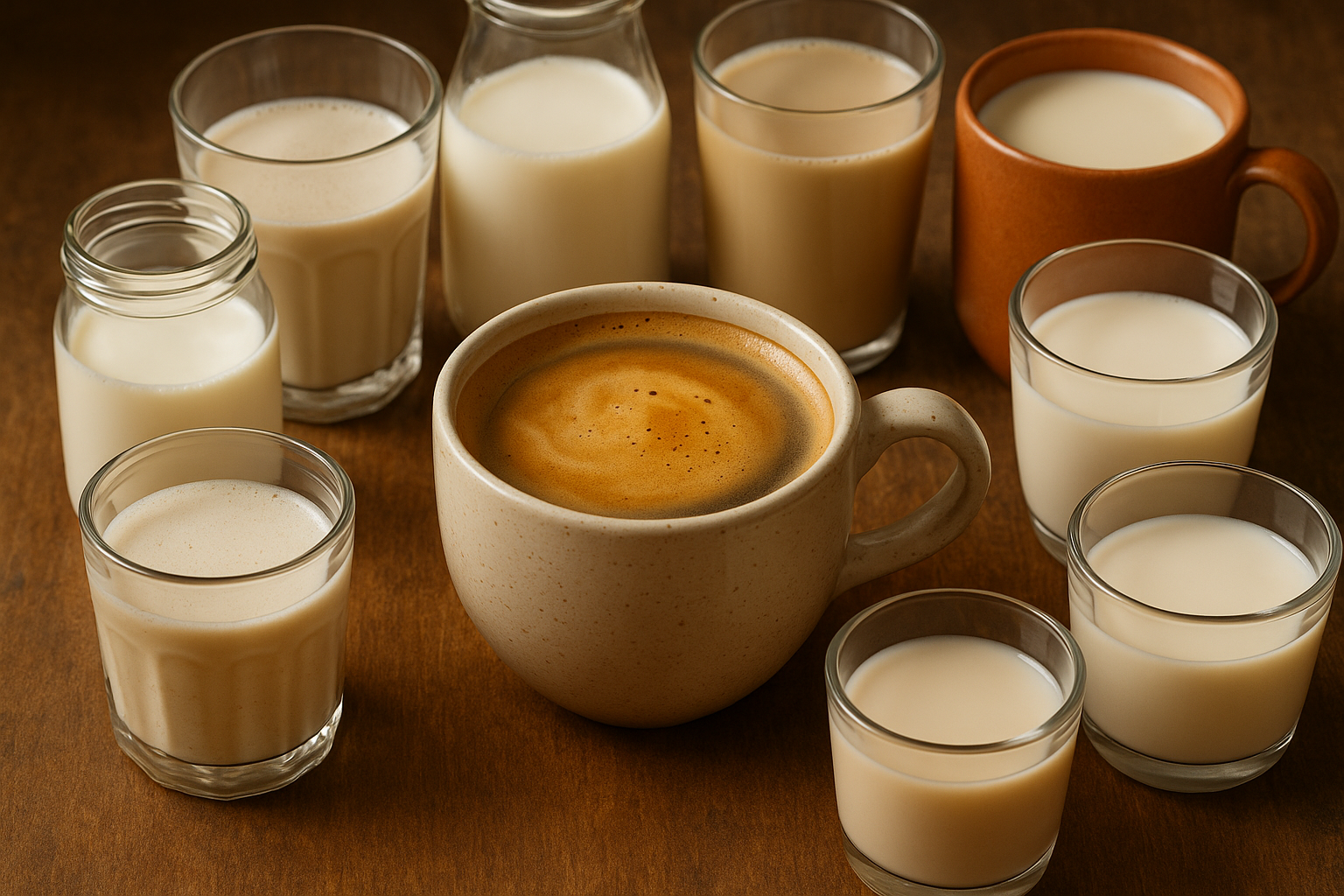
When we think about the flavor of coffee, we often focus on beans, roast levels, or brewing methods. But for millions of coffee drinkers around the world, the cup isn’t complete without a splash (or more) of milk.
While dairy has long been the default, the rise of plant-based alternatives has shifted the landscape, offering new flavors, textures, and ethical considerations. But how much does your choice of milk actually change the flavor of your coffee?
Let’s break down how different milk options—both traditional and alternative—impact the overall sensory experience of your cup, and how you can choose the best one for your taste and brewing method.
Why Milk Matters in Coffee
Milk alters coffee in multiple ways. It affects:
- Sweetness and bitterness perception
- Texture and body of the drink
- Aroma and aftertaste
- Foaming capability (for lattes, cappuccinos, etc.)
Different types of milk interact uniquely with coffee’s acids, oils, and aromatics. So whether you’re pulling a shot of espresso or making a cold brew, your milk choice can elevate or mask flavor notes.
The Chemistry Behind Milk and Coffee
When milk is added to coffee, it does more than just lighten the color. It alters the chemistry. Here are a few key reactions:
- Lactose adds natural sweetness.
- Proteins (like casein) bind to bitter compounds, reducing perceived bitterness.
- Fat content enhances mouthfeel and carries flavor compounds.
Plant-based milks have their own unique chemical makeup—some don’t bind to bitterness as well, while others introduce their own aromatic profiles that complement or clash with coffee’s notes.
Dairy Milk: The Gold Standard?
Dairy milk is often considered the benchmark for coffee blending due to its neutral, creamy nature and ability to foam reliably. Let’s look at the key types:
Whole Milk
- Fat Content: ~3.25%
- Texture: Rich and creamy
- Taste Impact: Enhances sweetness, balances acidity
- Best With: Espresso drinks, like lattes and flat whites
Whole milk’s higher fat content allows it to absorb and highlight coffee’s flavor compounds. It also creates stable microfoam for latte art.
2% or Low-Fat Milk
- Fat Content: 1–2%
- Texture: Lighter body
- Taste Impact: Less rich, but still softens bitterness
- Best With: Drip coffee or lighter espresso
The lower fat content means less richness, but it still blends well without overwhelming the coffee’s nuances.
Skim Milk
- Fat Content: 0%
- Texture: Thin and watery
- Taste Impact: Sharpens acidity and can taste “flat”
- Best With: Not ideal for specialty coffee
Although skim milk still foams decently, it tends to clash with high-quality coffee and diminishes complexity.
Plant-Based Milks: Expanding the Flavor Frontier
Plant milks bring more than just a dairy-free option—they introduce unique flavor profiles and textures. But not all are created equal.
Oat Milk
- Taste: Naturally sweet, grainy
- Texture: Thick and creamy
- Performance: Excellent froth, stable microfoam
- Best With: Espresso, especially darker roasts
Oat milk has become the favorite in cafés for its barista-friendly properties. It complements nutty, chocolatey, and roasty notes.
Almond Milk
- Taste: Nutty and slightly bitter
- Texture: Thin unless fortified
- Performance: Inconsistent froth, may split in hot coffee
- Best With: Cold brew, iced lattes
Almond milk’s strong flavor can overpower lighter roasts. It works better chilled and can be temperamental when steamed unless it’s a barista blend.
Soy Milk
- Taste: Neutral, slightly beany
- Texture: Creamy with good body
- Performance: Good frothing with barista versions
- Best With: Medium roasts, café-style drinks
Soy milk was one of the first popular plant-based options. Modern formulations have improved frothing and flavor balance significantly.
Coconut Milk
- Taste: Strong coconut flavor, slightly sweet
- Texture: Thin or oily
- Performance: Poor froth, separates easily
- Best With: Tropical-style iced coffee or cold brew
Coconut milk can completely transform your cup with its bold flavor. It’s best used sparingly and for creative drinks, not standard espresso.
Macadamia Milk
- Taste: Buttery and subtly nutty
- Texture: Smooth with moderate creaminess
- Performance: Good froth if formulated for baristas
- Best With: Light roasts or single-origin pour-overs
Macadamia milk is still niche but growing. It tends to let the coffee shine while adding depth to the body.
Cashew Milk
- Taste: Creamy, mildly nutty
- Texture: Very smooth
- Performance: Poor frothing unless formulated for baristas
- Best With: Filter coffee, cortado
Cashew milk is underrated. It has a mellow flavor and good natural sweetness, but lacks structure in steamed drinks.
Foaming Ability: A Game-Changer for Lattes
If you’re making lattes, flat whites, or cappuccinos, your milk’s ability to foam is critical. Here’s a quick ranking (general, varies by brand):
- Whole Milk
- Oat Milk (barista version)
- Soy Milk (barista version)
- 2% Milk
- Almond Milk (barista version)
- Cashew Milk
- Coconut Milk
Barista-specific plant-based milks often contain stabilizers and oils to replicate dairy-like foam.
Matching Milk with Roast Profiles
Pairing milk with the right roast type helps balance the cup:
- Light Roast: Best with subtle plant milks (macadamia, cashew, oat)
- Medium Roast: Versatile; works with most milks
- Dark Roast: Stands up well to strong-flavored milks like oat or soy
Darker roasts pair well with higher-fat milks that soften their bitterness and enhance their chocolate or caramel notes.
Health and Nutrition: A Secondary but Important Factor
While flavor may be the top priority, health matters to many coffee drinkers. Here’s a brief comparison:
| Milk Type | Calories (per cup) | Protein | Fat | Sugar (natural or added) |
|---|---|---|---|---|
| Whole Milk | 150 | 8g | 8g | 12g |
| Skim Milk | 90 | 8g | 0g | 12g |
| Oat Milk | 120–160 | 2–4g | 5–7g | 5–7g |
| Almond Milk | 30–60 | 1g | 2.5g | 0–2g |
| Soy Milk | 100 | 7g | 4g | 2–5g |
| Coconut Milk | 45 | 0g | 4.5g | 0–1g |
| Macadamia Milk | 50 | 1g | 4g | 1g |
Some plant-based options are fortified with calcium, B12, and vitamin D, making them suitable dairy alternatives from a nutritional standpoint.
Ethical and Environmental Considerations
Choosing your milk isn’t just about taste—it’s also about ethics and sustainability.
- Dairy milk contributes to higher greenhouse gas emissions.
- Oat and soy milks are among the most eco-friendly.
- Almond milk requires significant water, especially problematic in drought-prone regions.
- Coconut and macadamia milks often involve long-distance transport and have mixed labor practices.
Baristas and cafés are increasingly highlighting carbon footprints and offering sustainable milk choices to align with customer values.
Tips for Choosing the Right Milk for Your Coffee
- Taste before committing – Try your milk of choice alone and with coffee to compare.
- Buy barista blends – Especially for frothing, barista-specific options are worth the extra cost.
- Mind your roast – Match milk strength to roast intensity.
- Experiment with temperature – Some milks split at high heat; try lower steaming temps.
- Consider ethics and health – Choose what aligns with your values and needs.
Final Thoughts: More Than Just a Splash
Milk plays a larger role in your coffee than most people realize. Whether you’re sipping a flat white made with oat milk or adding a dash of whole milk to your pour-over, your choice impacts more than texture—it affects sweetness, aroma, and even perceived acidity.
Understanding these effects empowers you to create a cup of coffee that’s not only delicious but also thoughtful, aligning with your taste, values, and health goals.
So next time you reach for the milk carton or plant-based jug, you’ll know exactly what kind of experience you’re pouring into your cup.

Marcelo Oliveira is a passionate coffee enthusiast and writer who explores every angle of the world’s favorite brew—from its rich history to modern brewing techniques. With a deep appreciation for both tradition and innovation, Marcelo brings clear, engaging insights to help readers enjoy coffee on a whole new level.