
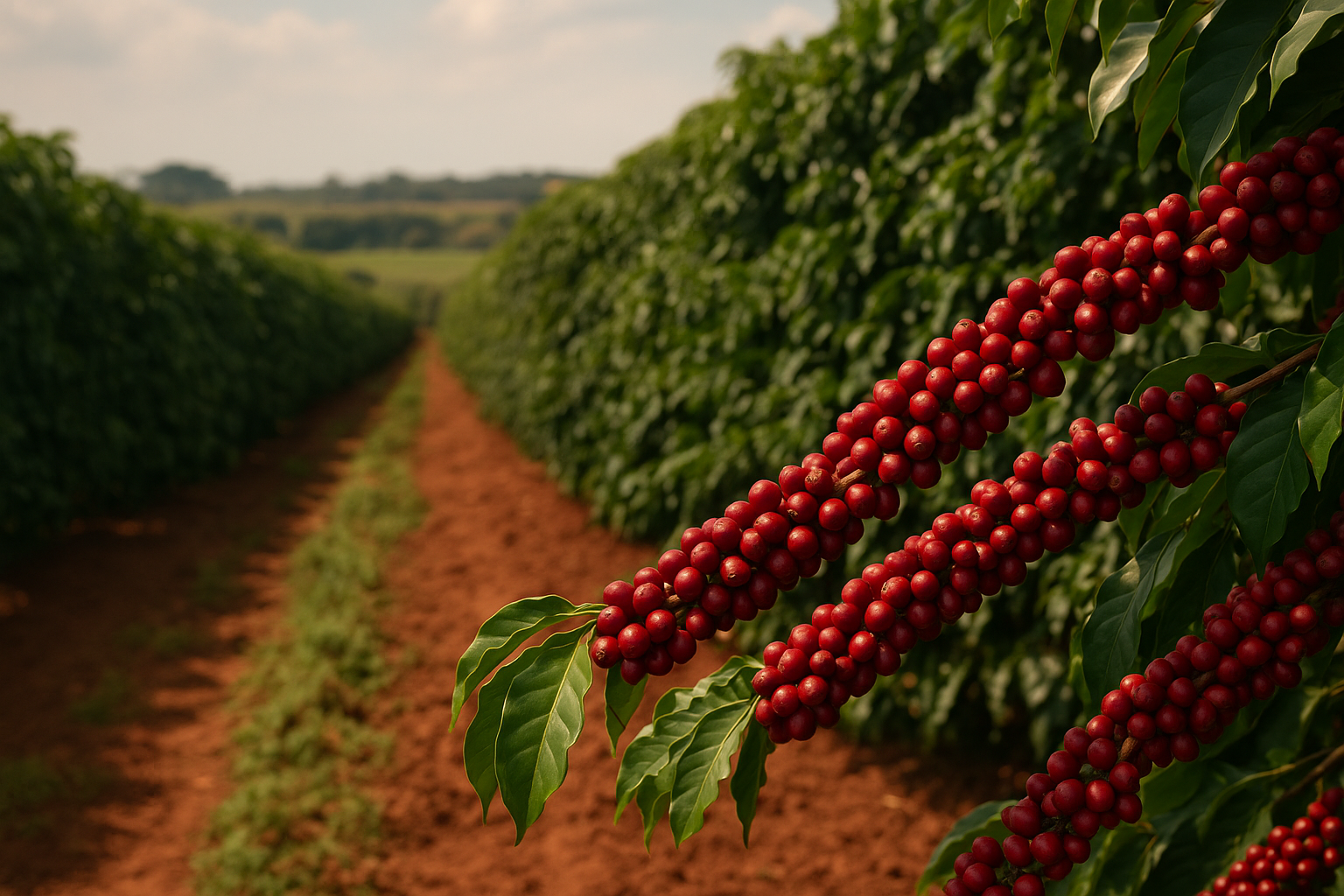
Brazil is known worldwide as the land of coffee. Its name is practically synonymous with the drink in many corners of the globe.
But this wasn’t always the case.
The journey of coffee in Brazil is a story of economic ambition, colonization, innovation, and labor struggles. It begins with a single plant and evolves into an empire of plantations that changed the country’s destiny and shaped global coffee culture.
This article dives deep into the roots of Brazilian coffee, exploring how the bean took hold and transformed a nation.
The Arrival of Coffee in Brazil
Coffee arrived in Brazil in the early 18th century. Most historians agree that it was introduced around 1727 by Francisco de Melo Palheta, a Portuguese colonel who supposedly smuggled coffee seeds from French Guiana.
Legend has it that he charmed the governor’s wife, who secretly handed him the seeds hidden in a bouquet.
While romanticized, this story symbolizes the beginning of a revolution.
What started as a few seedlings in the northern region of Pará would, over the next century, grow into one of the largest coffee industries in the world.
Early Cultivation in the North
In the early days, coffee was a novelty in Brazil. It was cultivated mainly for domestic use and grown in small plots.
The hot and humid climate of the northern regions wasn’t ideal, and expansion was slow at first.
However, by the late 1700s, farmers began moving coffee cultivation southward—toward the fertile lands of Rio de Janeiro, São Paulo, and Minas Gerais.
It was there, in Brazil’s southeastern regions, that the true coffee boom would begin.
The Rise of Coffee Plantations
The 19th century was the golden era of Brazilian coffee.
As European and American demand for coffee exploded, Brazil had both the land and the climate to scale production.
Plantations—known as fazendas—began to spread across the southeastern countryside. These were large agricultural estates, often self-sufficient and heavily reliant on manual labor.
Coffee became the main export product of the country, surpassing sugar, cotton, and tobacco.
By the mid-1800s, Brazil was producing more than half of the world’s coffee.
The Role of Slave Labor
The rapid expansion of coffee plantations was built on the backs of enslaved Africans.
Slavery had already been an established part of Brazilian society, especially in sugar plantations. When coffee arrived, the demand for labor increased exponentially.
Plantation owners imported hundreds of thousands of enslaved people from Africa to work in brutal conditions.
Slaves were responsible for planting, harvesting, processing, and transporting the coffee beans. The work was physically intense and often dehumanizing.
By the 1850s, Brazil had become the largest slaveholding country in the Western Hemisphere.
Coffee and slavery were deeply intertwined during this period, creating a dark legacy that still echoes today.
Economic Boom and the Empire
The coffee boom coincided with a period of political stability under the Brazilian Empire (1822–1889).
Coffee wealth helped finance infrastructure, such as railways and ports, and shaped the rise of an elite landowning class.
Many plantation owners gained political power and influence. They played a key role in maintaining the monarchy and resisting movements for abolition and reform.
The Brazilian economy became heavily dependent on coffee exports, making the crop not only a commodity but a national priority.
This era gave rise to the term café com leite (coffee with milk), symbolizing the political alliance between coffee growers in São Paulo and dairy farmers in Minas Gerais who dominated national politics for decades.
The End of Slavery and Labor Transition
Brazil abolished slavery in 1888, becoming the last country in the Americas to do so.
This created a labor crisis on the coffee plantations, which had relied almost entirely on enslaved workers.
To fill the gap, plantation owners turned to European immigrants—mainly Italians, Germans, and Portuguese. The government offered incentives to attract these workers, promising land, wages, and better living conditions.
Many immigrants faced exploitation and broken promises, leading to unrest and even revolts.
Nonetheless, this new labor force helped sustain the coffee industry into the 20th century.
Coffee and Urban Growth
As the coffee industry flourished, so did Brazil’s cities.
São Paulo transformed from a sleepy village into a booming metropolis. Coffee money funded banks, schools, railways, and newspapers.
The city’s elite, enriched by coffee wealth, began building European-style mansions, sponsoring cultural institutions, and investing in new industries.
Coffee wasn’t just changing the fields—it was reshaping the entire urban landscape.
The port of Santos became a crucial gateway, exporting millions of sacks of coffee annually and linking Brazil to the global market.
Coffee in Global Trade
By the early 1900s, Brazil was the undisputed king of coffee.
It dominated global markets, often supplying up to 70% of the world’s coffee. This dominance allowed Brazil to influence global prices and trade policies.
The government even intervened directly in the market. In the early 20th century, the Valorization of Coffee program was created to stabilize prices by buying and storing excess supply.
While successful in the short term, this policy created economic risks that would surface during global downturns like the Great Depression.
Still, Brazil remained the world’s top exporter and continued to shape coffee consumption around the globe.
Challenges and Reform in the 20th Century
The coffee industry faced numerous challenges in the 20th century.
Economic downturns, overproduction, and falling prices hurt both small farmers and large plantation owners. Technological innovation was slow to arrive, and outdated farming methods led to soil degradation.
During Brazil’s military dictatorship (1964–1985), the government promoted agricultural modernization. Coffee cooperatives and research institutions were created to improve production.
New coffee varieties were developed, and mechanized harvesting was introduced in some regions.
Despite the challenges, coffee remained a key part of the Brazilian economy and identity.
The Shift to Quality and Sustainability
In the 21st century, Brazil’s coffee industry has undergone a major transformation.
While still the world’s largest producer, Brazil is now also a leader in specialty coffee. Producers are focusing more on quality, flavor profiles, and sustainable farming practices.
Regions like Sul de Minas, Cerrado Mineiro, and Espírito Santo are gaining international recognition for their distinct terroirs.
Brazilian farmers are now participating in global competitions and direct trade models, connecting with roasters and consumers around the world.
This marks a new chapter—one defined not by mass production, but by innovation and excellence.
Coffee and Brazilian Identity
Coffee is more than a crop in Brazil—it’s part of the culture.
From the traditional cafezinho offered to guests, to the bustling cafés of São Paulo and Rio, coffee is deeply woven into daily life.
It represents hospitality, tradition, and pride. It’s a drink that tells a story—of struggle, resilience, and reinvention.
Many Brazilians still live in or near coffee-growing regions. For them, coffee is a family heritage, passed down through generations.
It’s a connection to the land, the past, and the future.
Final Thoughts: From Seed to Superpower
The history of coffee in Brazil is a tale of transformation.
From a smuggled seed to a global empire, coffee helped shape the nation’s economy, culture, and global standing.
It fueled the rise of cities, powered political elites, and connected Brazil to the world in ways few commodities ever could.
But it also carries a complex legacy—one that includes slavery, inequality, and exploitation.
Today, Brazilian coffee is evolving once again, embracing sustainability, transparency, and quality.
The next time you drink a cup of Brazilian coffee, take a moment to think about the soil, the hands, and the history behind it.
It’s more than just a beverage—it’s the story of a nation.

Marcelo Oliveira is a passionate coffee enthusiast and writer who explores every angle of the world’s favorite brew—from its rich history to modern brewing techniques. With a deep appreciation for both tradition and innovation, Marcelo brings clear, engaging insights to help readers enjoy coffee on a whole new level.