
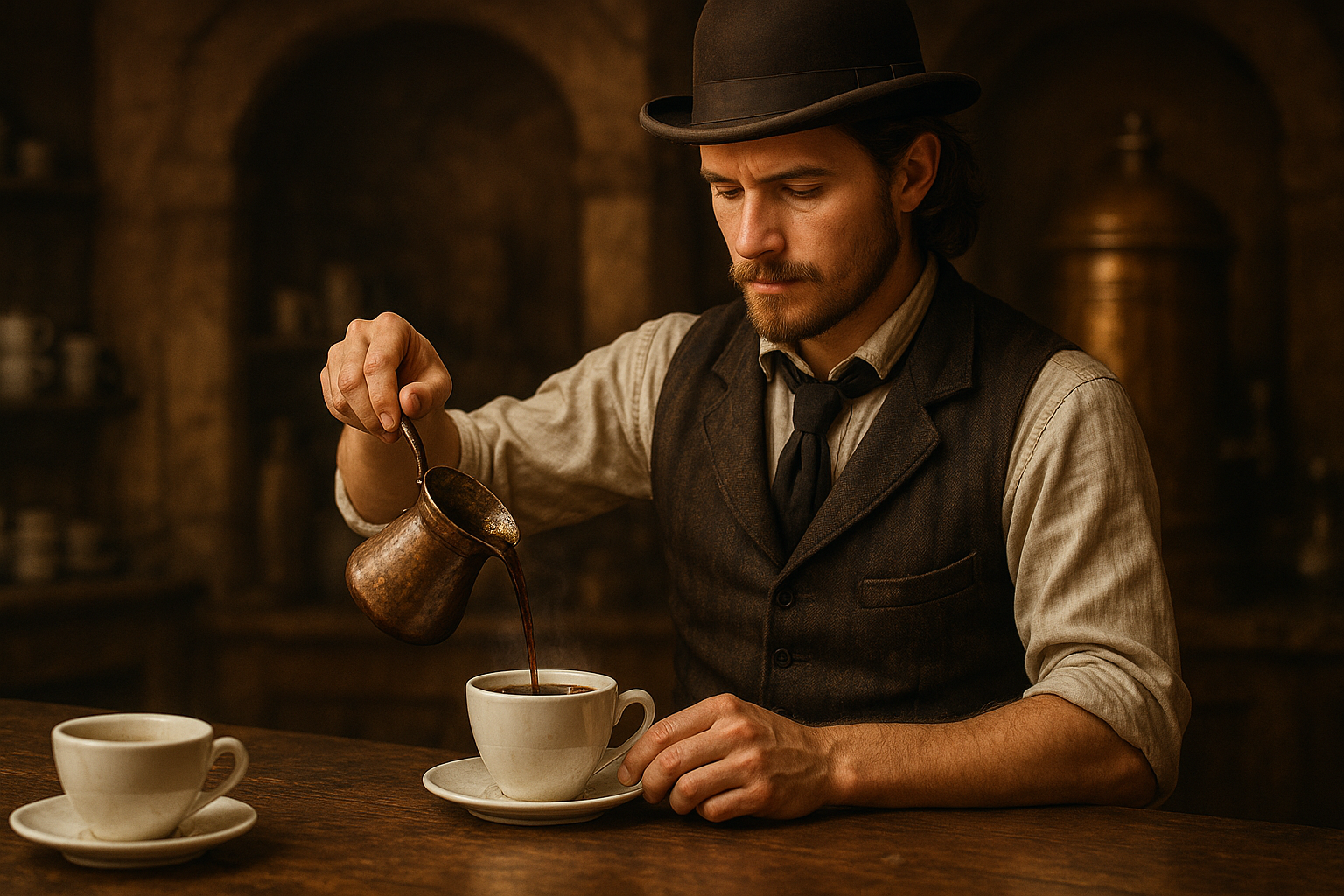
Coffee is one of the most widely consumed beverages in the world today. It’s found in nearly every culture, from bustling cafés in Paris to small roadside stalls in Ethiopia.
But not so long ago, this seemingly harmless drink was considered dangerous—even revolutionary.
In fact, throughout history, coffee has been banned in several countries by kings, sultans, and religious leaders who feared its power to stir unrest and encourage free thought.
This article explores the fascinating history of coffee bans and the political, religious, and social forces behind them.
Coffee’s Rise and the Suspicion It Sparked
When coffee first began spreading through the Islamic world in the 15th and 16th centuries, it wasn’t just seen as a new beverage.
It was something radically different.
Unlike wine or opium, which dulled the senses, coffee sharpened the mind. People who drank it stayed awake longer, engaged in lively conversations, and gathered in public places called coffeehouses.
This new social dynamic made rulers nervous.
A drink that kept people alert and critical was seen as a threat to the established order. And the coffeehouse—where ideas were shared freely—became a potential breeding ground for rebellion.
Mecca: The First Ban in 1511
One of the first recorded bans on coffee happened in Mecca in 1511.
Khair Beg, the governor of Mecca under the Mamluk sultanate, noticed that coffeehouses were becoming increasingly popular among Sufi mystics and the general public.
People gathered late into the night to discuss religion, politics, and philosophy—topics that, in his eyes, could spark sedition.
He declared coffee haram (forbidden) and shut down coffeehouses.
But the backlash was swift.
The ban was eventually overturned by religious scholars and political leaders who saw no legitimate reason to outlaw the drink. Still, this set the stage for a pattern that would repeat in other regions.
The Ottoman Empire: Bans and Brutality
The Ottoman Empire both embraced and suppressed coffee, depending on the ruler.
Under Sultan Murad IV in the early 1600s, coffee was outlawed in Istanbul. Murad viewed coffeehouses as hotbeds of gossip, political dissent, and immorality.
He didn’t just issue a simple ban.
He made it punishable by death.
Historians note that Murad IV would sometimes walk the streets in disguise to catch violators himself. Those found drinking coffee could be beaten or executed on the spot.
Later, under different sultans, the ban was lifted and coffee became widely accepted once again. But the fear coffee inspired in rulers remained a constant theme.
Cairo and the Clash of Cultures
In Cairo, coffee was met with resistance by religious authorities.
Much like in Mecca, Islamic scholars were divided on whether coffee should be allowed. Some believed it caused a form of intoxication, which was forbidden under Islamic law.
In 1532, coffeehouses in Cairo were raided and closed.
But the popularity of the drink made the bans nearly impossible to enforce. Despite official decrees, the people kept drinking coffee, often in secret or in private gatherings.
The social habit proved stronger than the law.
Europe’s Initial Skepticism
When coffee reached Europe in the 17th century, it was met with both curiosity and caution.
Some Christian leaders called it the “bitter invention of Satan.” In 1615, Catholic clergy in Italy asked Pope Clement VIII to declare coffee heretical.
Instead, the Pope tasted it—and liked it.
He reportedly said, “This Satan’s drink is so delicious that it would be a pity to let the infidels have exclusive use of it.” He blessed coffee, and it quickly spread across Europe.
But not every ruler shared his view.
King Charles II and the English Coffeehouse Crackdown
In England, coffeehouses flourished in the 1600s. They were called “penny universities” because for the price of a cup, one could engage in intelligent conversation.
But not everyone appreciated the free flow of ideas.
In 1675, King Charles II issued a proclamation to shut down coffeehouses.
He accused them of being centers of political rumor and sedition. Coffeehouses, he claimed, were undermining royal authority by spreading “false news.”
The public revolted. Within days, the king was forced to withdraw the ban.
It was one of the earliest examples of public opinion successfully challenging censorship.
Sweden and the Fear of Madness
In 18th-century Sweden, coffee was considered a medical threat.
King Gustav III believed that coffee caused insanity and launched a bizarre experiment to prove it.
He ordered two identical twins, both sentenced to death, to undergo a study: one would drink three pots of coffee a day, the other, three pots of tea. Doctors would monitor their health.
Ironically, the king and the doctors died before either twin.
The tea-drinking twin died first. The coffee-drinker lived the longest.
Despite this, Sweden imposed heavy taxes and restrictions on coffee for decades, including bans on ownership of cups and saucers.
Prussia and the Battle of Beer vs. Coffee
In 18th-century Prussia, King Frederick the Great had a strong dislike for coffee.
He believed it was weakening national culture and replacing traditional beer consumption. Beer, he argued, was part of Prussian identity.
He issued edicts limiting coffee consumption and tried to persuade citizens to return to drinking beer with breakfast.
His campaign was largely unsuccessful.
People preferred the clarity and energy that coffee gave them over the dulling effects of beer. Once again, personal habit overpowered political decree.
Coffee as a Threat to the Status Quo
Why did so many rulers and religious leaders ban coffee?
The answer lies in coffee’s unique social function.
It wasn’t just a drink—it was a catalyst. It encouraged conversation, critical thinking, and group gatherings.
In societies where power was tightly controlled, coffeehouses became places of concern.
They were the social media of their day—unregulated spaces where information could spread quickly and authorities had little control.
This made them targets for censorship and suppression.
The Coffeehouse as a Political Force
Throughout history, revolutions and political movements have often brewed in coffeehouses.
In France, cafés became hubs of revolutionary thought leading up to the French Revolution. In the United States, coffee replaced tea after the Boston Tea Party and became a symbol of independence.
In the Middle East, coffeehouses were places where anti-colonial ideas were discussed and organized.
Time and again, governments that feared change also feared coffee.
They recognized its power not as a substance—but as a social engine.
Modern Reflections on the Ban
Today, it’s hard to imagine a country banning coffee. Yet the historical fear of coffee teaches us an important lesson about control.
Leaders feared coffee not because it harmed the body—but because it empowered the mind.
They feared what happens when people gather, talk, and think critically.
These bans were never really about caffeine. They were about communication, solidarity, and the power of ideas.
In this way, coffee has always been more than a drink—it’s been a symbol of freedom.
Coffee in the 21st Century: A Global Unifier
In today’s world, coffee is a unifier.
It brings together people of all ages, races, and beliefs. It’s consumed by students, workers, intellectuals, and artists alike.
Coffeehouses are now seen as places of creativity and collaboration.
But the history reminds us that even simple pleasures can be seen as threats by those in power. It shows us how fragile freedom of expression can be—and how easily it can be targeted.
Final Thoughts: From Rebellion to Ritual
Coffee has come a long way from being labeled a threat to society.
What was once banned, feared, and persecuted is now embraced and celebrated. Yet the core truth remains: coffee empowers. It energizes the body—and awakens the mind.
Perhaps this is why it has always carried a subtle undercurrent of revolution.
So the next time you walk into a coffee shop or sip your morning brew, remember—you’re participating in a ritual that once shook empires and challenged kings.
And all from a humble bean.
Marcelo Oliveira is a passionate coffee enthusiast and writer who explores every angle of the world’s favorite brew—from its rich history to modern brewing techniques. With a deep appreciation for both tradition and innovation, Marcelo brings clear, engaging insights to help readers enjoy coffee on a whole new level.