
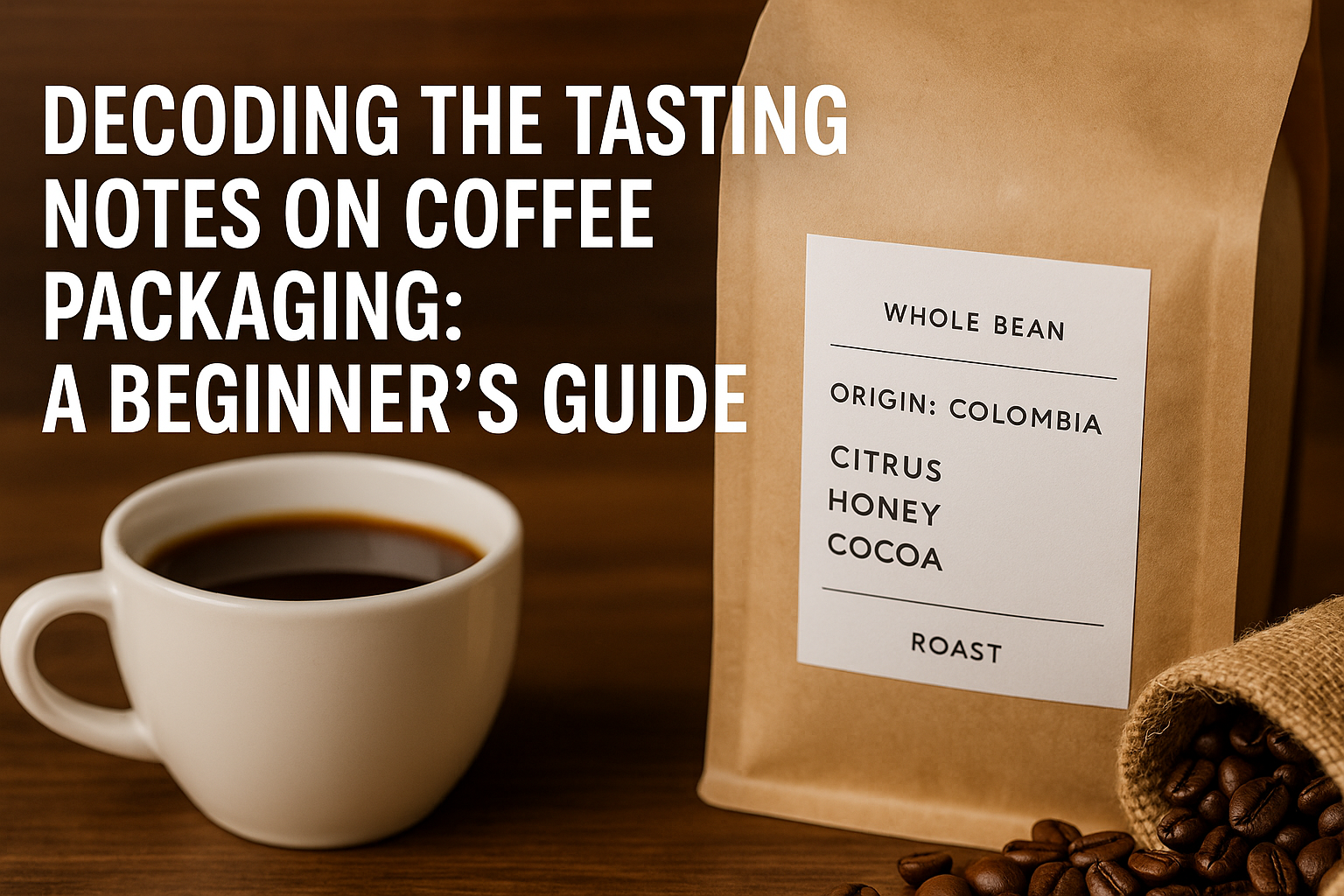
If you’ve ever picked up a bag of specialty coffee, you’ve probably seen tasting notes like “jasmine, apricot, caramel” or “dark chocolate, blackberry, nutmeg”.
At first glance, these descriptions might feel intimidating, confusing, or even a bit pretentious.
Do these flavors actually come from the coffee itself? Are there added ingredients? How do you train your palate to recognize them?
In this guide, we’ll explore what tasting notes really mean, how they’re identified, and how to use them to find coffee that matches your personal taste.
What Are Tasting Notes?
Tasting notes are descriptions of the flavors and aromas naturally present in a coffee. They are not artificial additives or flavorings. Instead, they come from the coffee’s variety, origin, processing method, and roast profile.
Just like wine or chocolate, coffee contains hundreds of aromatic compounds. These compounds are formed through natural processes—especially during roasting.
When experts taste coffee, they identify these aromas and translate them into familiar flavors, like fruit, flowers, spices, or sweets.
Why Coffee Tastes Different
Coffee isn’t just coffee. The taste varies depending on several key factors:
- Origin: Soil, climate, altitude, and regional practices all shape flavor.
- Variety: Different coffee plant types (like Bourbon, Typica, or Geisha) produce different notes.
- Processing: Washed, natural, or honey processes influence sweetness and acidity.
- Roast Level: Light roasts highlight brightness and fruit, while dark roasts bring bitterness and chocolate.
- Freshness: Coffee changes over time; fresh beans deliver sharper flavors.
Even your brewing method affects taste, from espresso to pour-over to French press.
Understanding tasting notes helps you predict what your cup will taste like—before you even brew it.
How Are Tasting Notes Determined?
Most tasting notes are created by trained coffee professionals through a method called cupping. This standardized tasting process allows people to evaluate:
- Aroma (dry and wet)
- Flavor
- Aftertaste
- Acidity
- Body
- Balance
During cupping, professionals slurp the coffee (yes, slurp!) to spread it across the tongue. This enhances flavor perception and helps identify specific notes.
For example, a coffee might remind someone of red apple, cinnamon, or black tea—and those impressions become part of the tasting notes.
While these descriptions can be subjective, they follow widely accepted flavor references like the Coffee Taster’s Flavor Wheel developed by the Specialty Coffee Association.
Breaking Down Common Tasting Notes
Let’s look at a few broad categories and what they might tell you about a coffee’s profile.
1. Fruity Notes
These often indicate a coffee with bright acidity and complex flavors.
Examples:
- Berry (strawberry, blueberry, raspberry)
- Citrus (lemon, orange, grapefruit)
- Tropical (pineapple, mango, passionfruit)
- Stone fruit (peach, plum, apricot)
- Apple or pear
These are commonly found in African coffees and naturally processed beans.
2. Floral Notes
Floral coffees are light, aromatic, and elegant.
Examples:
- Jasmine
- Rose
- Honeysuckle
- Lavender
Floral notes are especially common in Geisha, Ethiopian heirloom, and light roasts.
3. Sweet Notes
Sweetness doesn’t refer to sugar, but to a perception of pleasant, balanced flavor.
Examples:
- Caramel
- Honey
- Brown sugar
- Maple syrup
- Molasses
Sweet notes often show up in washed Latin American coffees and medium roasts.
4. Nutty or Chocolatey Notes
These indicate a low-acid, smooth, and comforting cup.
Examples:
- Almond
- Hazelnut
- Peanut butter
- Cocoa
- Dark chocolate
Often found in Brazilian or Sumatran coffees and medium to dark roasts.
5. Spice Notes
Spice flavors add complexity and warmth.
Examples:
- Cinnamon
- Nutmeg
- Clove
- Black pepper
- Cardamom
Some processing methods, like anaerobic fermentation, amplify these characteristics.
6. Herbal or Earthy Notes
These flavors are less common and can be polarizing.
Examples:
- Fresh herbs
- Tobacco
- Earth
- Mushroom
- Wet leaves
They’re often associated with Sumatran coffees and wet-hulled processing.
Are Tasting Notes Real or Just Marketing?
Tasting notes can feel exaggerated or unrealistic. You might think, “This coffee just tastes like coffee to me!”
That’s totally normal.
While professionals can detect subtle nuances, the average drinker may only perceive general impressions—like fruity vs. bitter, or bright vs. heavy.
Tasting notes are not meant to be exact science. They serve as guides, helping you explore and compare coffees based on your personal preferences.
Over time, your palate develops. You may start recognizing certain flavors you once missed entirely.
How to Train Your Palate
Tasting coffee isn’t a talent—it’s a skill that can be developed. Here are a few tips to get started:
1. Taste Mindfully
Slow down your drinking. Smell the aroma before each sip. Let the coffee cool slightly to bring out more subtle flavors.
2. Compare Coffees Side by Side
Brew two or three different coffees and try them together. This comparison makes differences more obvious.
3. Use a Flavor Wheel
The Coffee Taster’s Flavor Wheel is a visual guide that helps you name what you’re tasting. It starts with broad categories (like fruity or nutty) and branches into specifics.
4. Practice with Real Foods
Smell and taste fruits, spices, herbs, and sweets. The more familiar you are with these flavors, the easier it is to detect them in coffee.
5. Keep a Tasting Journal
Write down what you notice with each coffee. Over time, you’ll see patterns and refine your vocabulary.
How to Read Coffee Labels with Confidence
Understanding tasting notes can help you choose coffees you’re more likely to enjoy. Here’s how to decode a typical label:
Example:
Ethiopia Yirgacheffe | Washed | Light Roast
Tasting Notes: Jasmine, Lemon, Green Tea
What it tells you:
- Origin: Likely bright and floral
- Process: Washed, so the cup is clean and clear
- Roast: Light, preserving acidity and aroma
- Flavor: Delicate, with citrus and floral characteristics
Now compare that to:
Brazil Cerrado | Natural | Medium Roast
Tasting Notes: Chocolate, Hazelnut, Brown Sugar
You can expect a sweeter, rounder, more comforting cup.
Learning to interpret labels allows you to shop smarter and waste less money on coffee that doesn’t match your taste.
Matching Tasting Notes to Your Preferences
If you’re not sure what kind of coffee you like, start by identifying some basic preferences:
- Do you enjoy acidity, like citrus fruits? Try African or Central American coffees.
- Do you prefer smooth and sweet flavors? Look for Brazilian or Colombian coffees with caramel or nutty notes.
- Like intense fruit? Go for naturally processed beans.
- Love floral aromas? Try Ethiopian Geisha or light roasts.
- Want a bold and earthy brew? Sumatran dark roasts may be your thing.
There’s no right or wrong—just what pleases your palate.
Tasting Notes and Roast Levels
Roast level can either highlight or mask tasting notes:
- Light Roast: Preserves origin flavor, high acidity, floral/fruit notes
- Medium Roast: Balanced sweetness, chocolate, nut, and caramel
- Dark Roast: More bitterness, smokiness, and body; less origin clarity
For the most vivid tasting notes, light and medium roasts are ideal. Dark roasts tend to flatten flavor variety, though they offer their own pleasures.
What If You Don’t Taste What’s on the Label?
It happens all the time.
Tasting is subjective. Variables like water temperature, grind size, and even your mood can affect perception.
Here’s what to do:
- Don’t be discouraged.
- Focus on general impressions (e.g., fruity vs. earthy).
- Keep tasting different coffees.
- Ask your local roaster for help or recommendations.
The more you taste, the more you learn.
Final Takeaway: Taste Is Personal
Tasting notes are not a test—they’re a conversation starter.
They help you explore the diverse world of coffee, appreciate craftsmanship, and discover what you truly enjoy.
Whether you taste peach and jasmine or just a really good cup of coffee, the experience is still valid.
Don’t be intimidated by fancy labels or expert language. Taste is personal. And your coffee journey is yours to enjoy—one cup at a time.
Next up: Article #3 – “How Altitude Affects Coffee Flavor: Exploring High-Grown Beans”
(Starting now)

Marcelo Oliveira is a passionate coffee enthusiast and writer who explores every angle of the world’s favorite brew—from its rich history to modern brewing techniques. With a deep appreciation for both tradition and innovation, Marcelo brings clear, engaging insights to help readers enjoy coffee on a whole new level.